
The Battle of Gettysburg, July 1–3, 1863
On July 3, 1863, the Battle of Gettysburg came to a close after three of the bloodiest days in American history — the turning point of the Civil War. My family’s ties to that field run deeper than I ever expected, and I want to share two of them here.
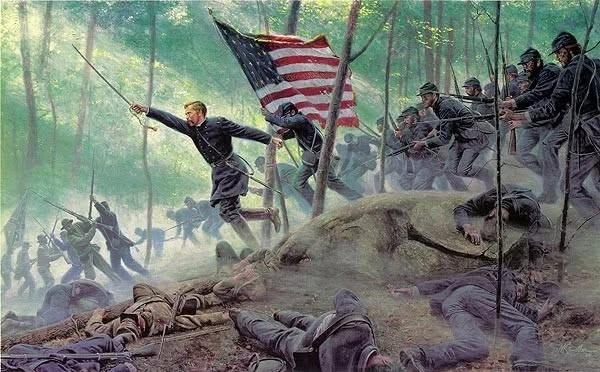
The Wheatfield fighting of July 2, 1863 — the ground Jonathan Heltzel’s company held below Stony Hill.
Jonathan D. Heltzel — Co. C, 110th Pennsylvania Infantry
Jonathan D. Heltzel (c. 1842–1864) enlisted as a Private in Company C, 110th Pennsylvania Volunteer Infantry, on October 24, 1861 — a 19-year-old farmer from Woodbury, Bedford County, standing 5’7″ with a dark complexion, grey eyes, and brown hair.
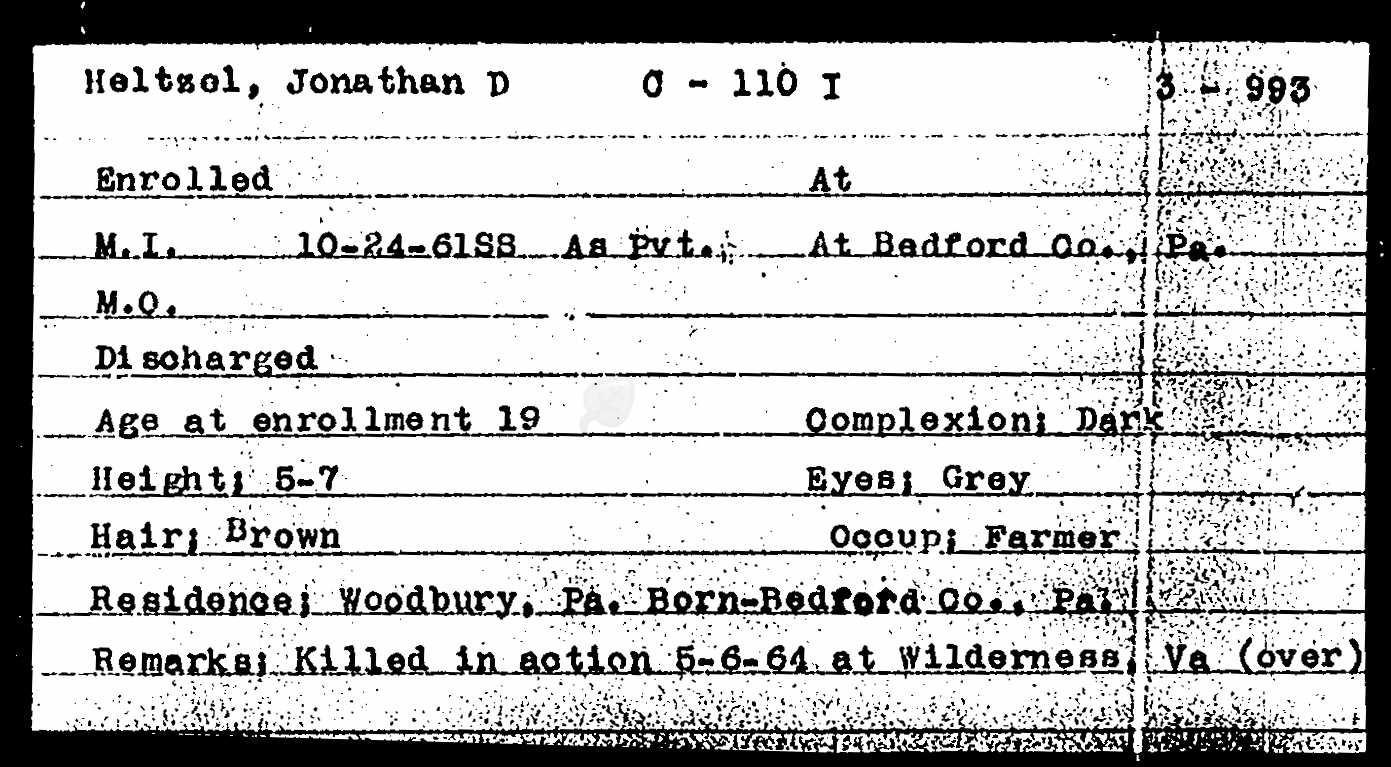
Pennsylvania Veterans Card File — enrollment details and remarks confirming Jonathan’s death at the Wilderness.
By the time his regiment marched north to meet Lee’s invasion of Pennsylvania, it had already been ground down by two years of hard fighting at Cedar Mountain, Second Bull Run, Fredericksburg, and Chancellorsville — reduced from ten companies to just six.

Company C, 110th Pennsylvania Infantry, photographed after the Battle of Fredericksburg, April 24, 1863 — Jonathan’s own company, though no individual soldier in this image is identified by name.
On July 2, 1863, Jonathan and the 110th were posted below Stony Hill, near the Wheatfield, where they traded close-range fire with the 9th Georgia Infantry for nearly an hour before helping drive the Confederates back in the Union counterattack that retook the ground. The next day, the regiment held the line on Cemetery Hill — meaning Jonathan had a front-row view as Pickett’s Charge broke against the Union center.
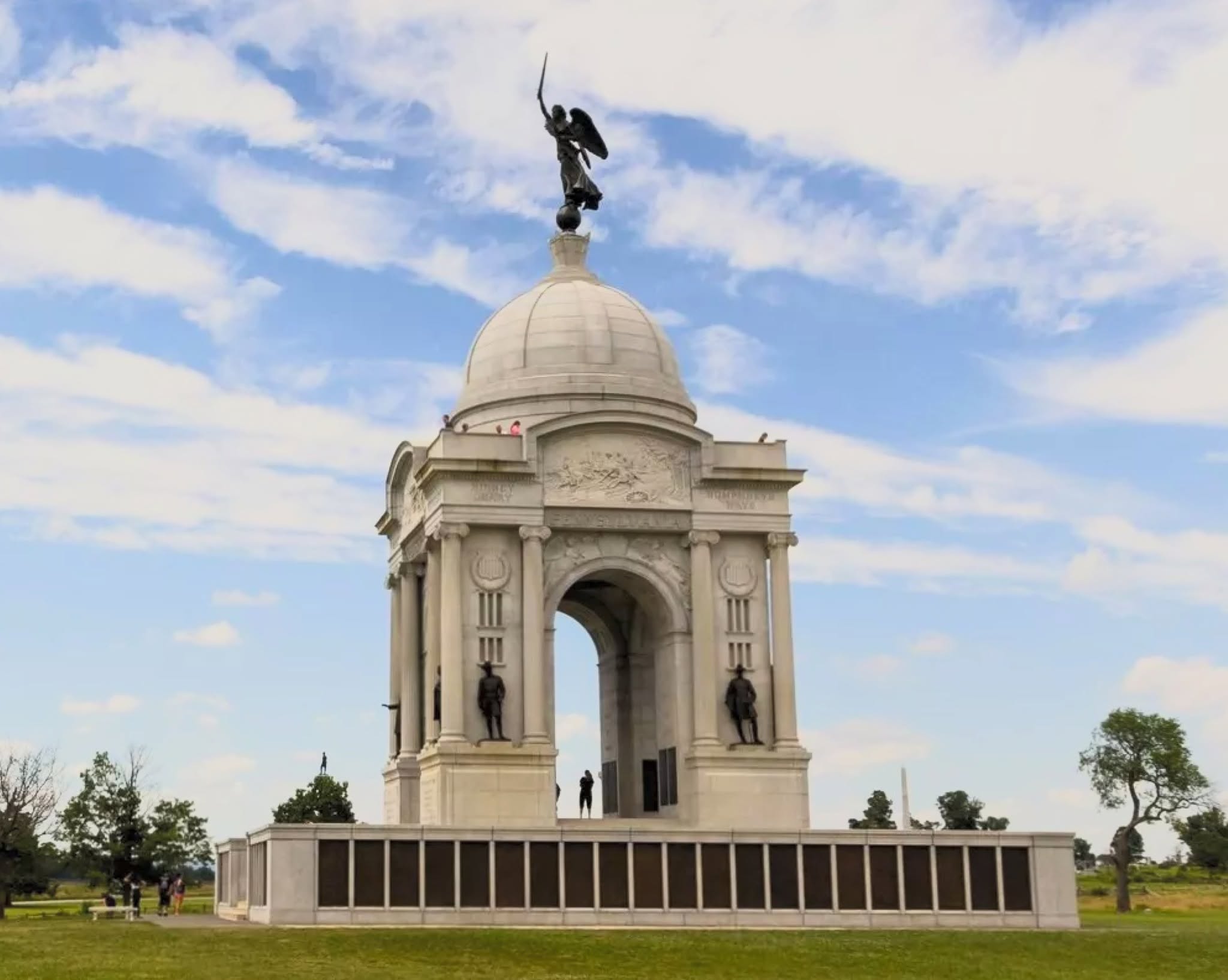
The Pennsylvania Memorial at Gettysburg National Military Park, where Jonathan’s name is engraved among the regiment’s rosters.
Separate from the state memorial, the 110th Pennsylvania also has its own regimental monument on De Trobriand Avenue, in the Wheatfield — standing on the very ground the regiment held against Longstreet’s advance on the afternoon of July 2. Dedicated September 11, 1889 by the Commonwealth of Pennsylvania, the thirteen-and-a-half-foot granite monument is topped by a life-sized infantryman, facing the direction the 110th fought. Its tablet records that 152 men of the regiment were present at Gettysburg, with 16 killed or mortally wounded and 37 more wounded — a reminder of how much the survivors, Jonathan among them, had already endured by the time they reached Pennsylvania soil.
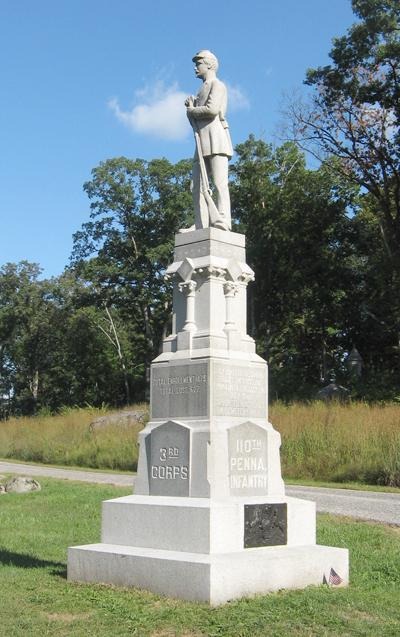
The 110th Pennsylvania Infantry Monument, De Trobriand Avenue, Gettysburg — 3rd Corps, dedicated 1889.
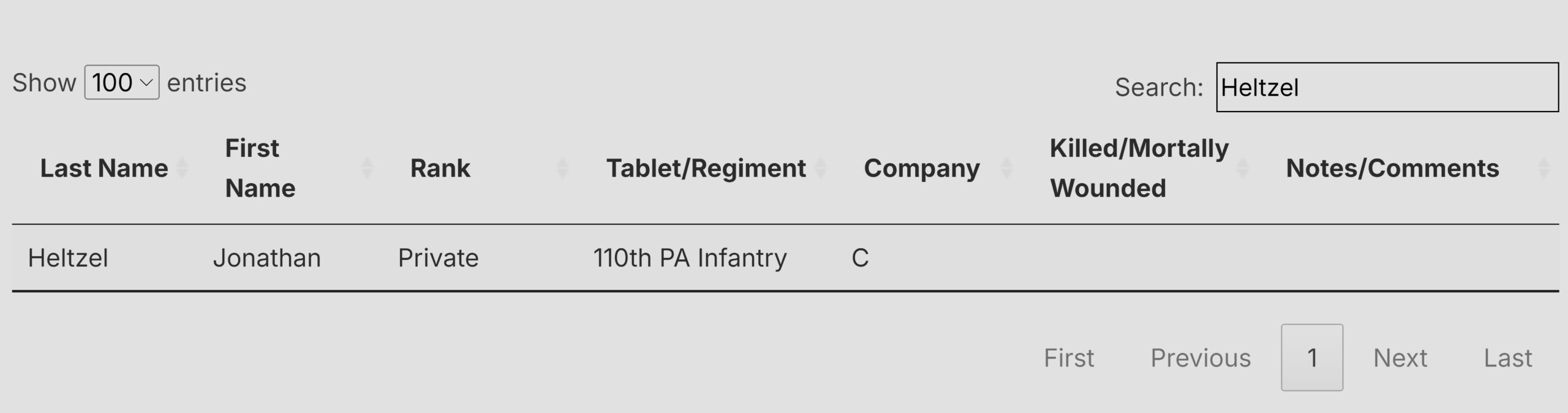
NPS Pennsylvania Memorial Searchable Database — confirming: “Heltzel, Jonathan, Private, 110th PA Infantry, Company C.”
Jonathan survived those three days. He didn’t have to keep fighting — but as his three-year term neared its end, he chose to re-enlist as a Veteran Volunteer. Nine months later, on May 6, 1864, he was killed in the burning thickets of the Battle of the Wilderness.
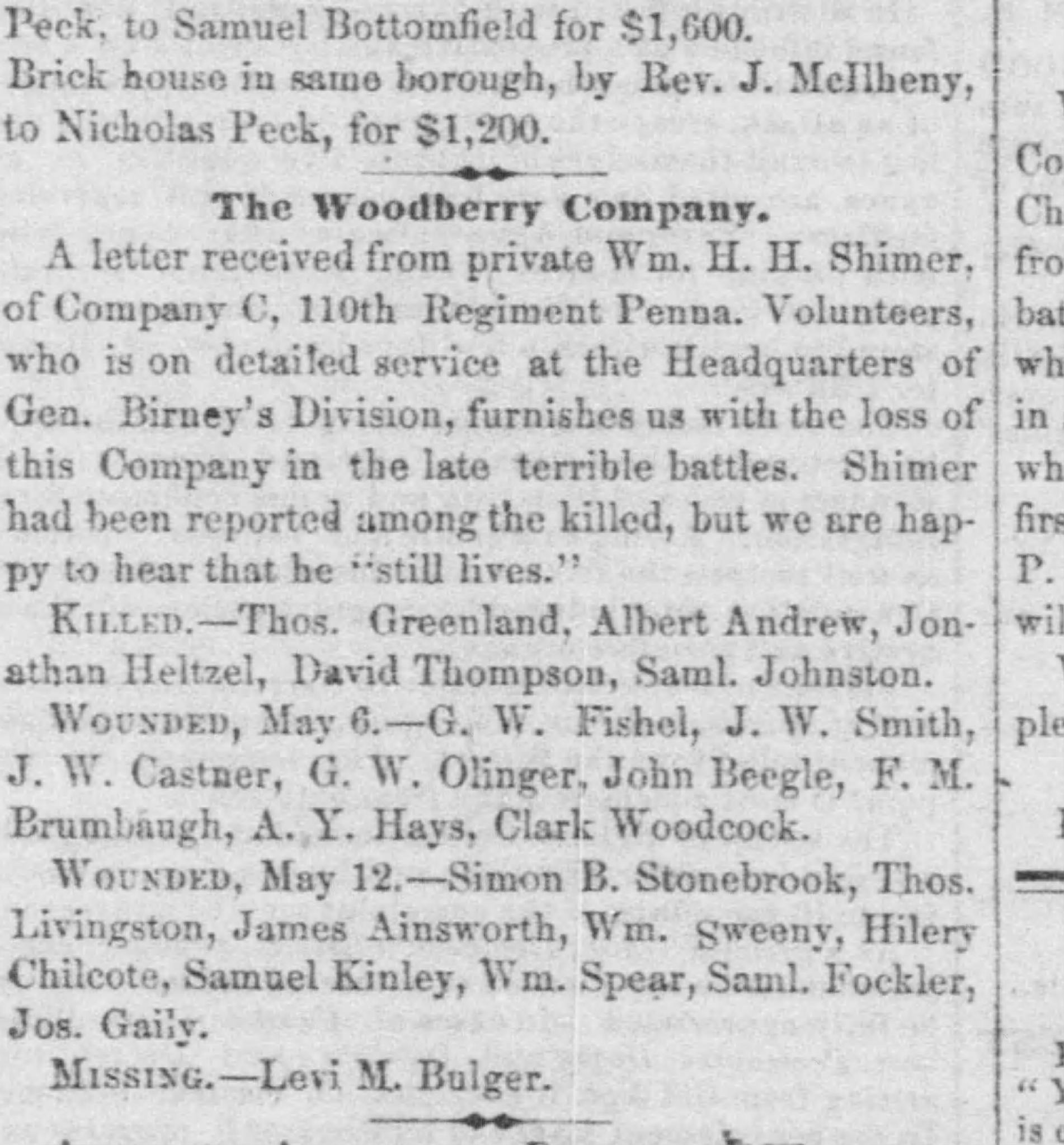
The Bedford Inquirer, June 10, 1864 — “The Woodberry Company,” naming Jonathan Heltzel among Company C’s Killed.
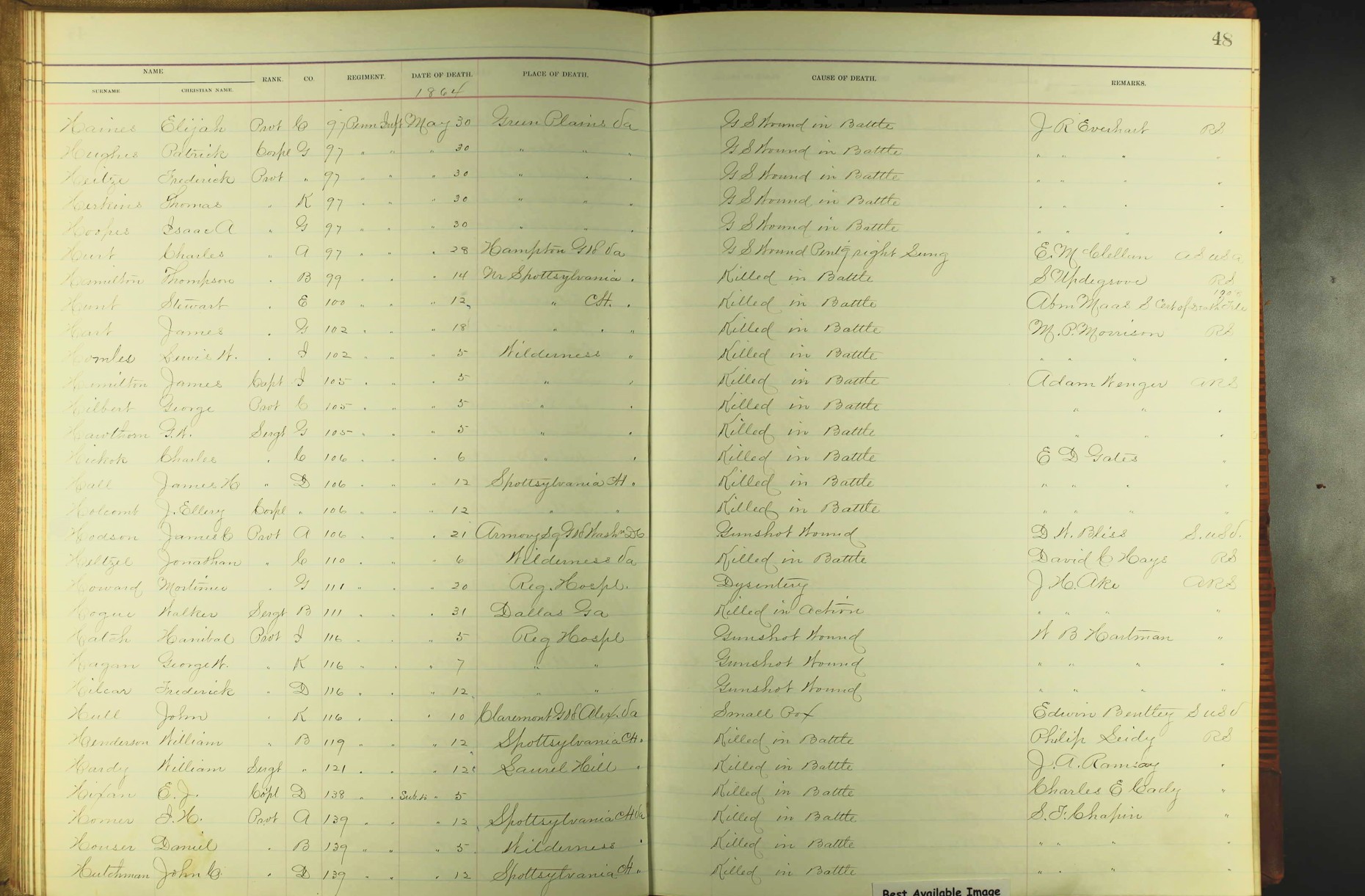
U.S. Register of Deaths of Volunteers, 1861–1865, page 48 — the War Department’s official death ledger entry for Jonathan Heltzel.
He never married; his parents, Martin and Margaret Heltzel, filed for his pension in the years that followed, seeking the support owed to the family of a soldier who never came home.
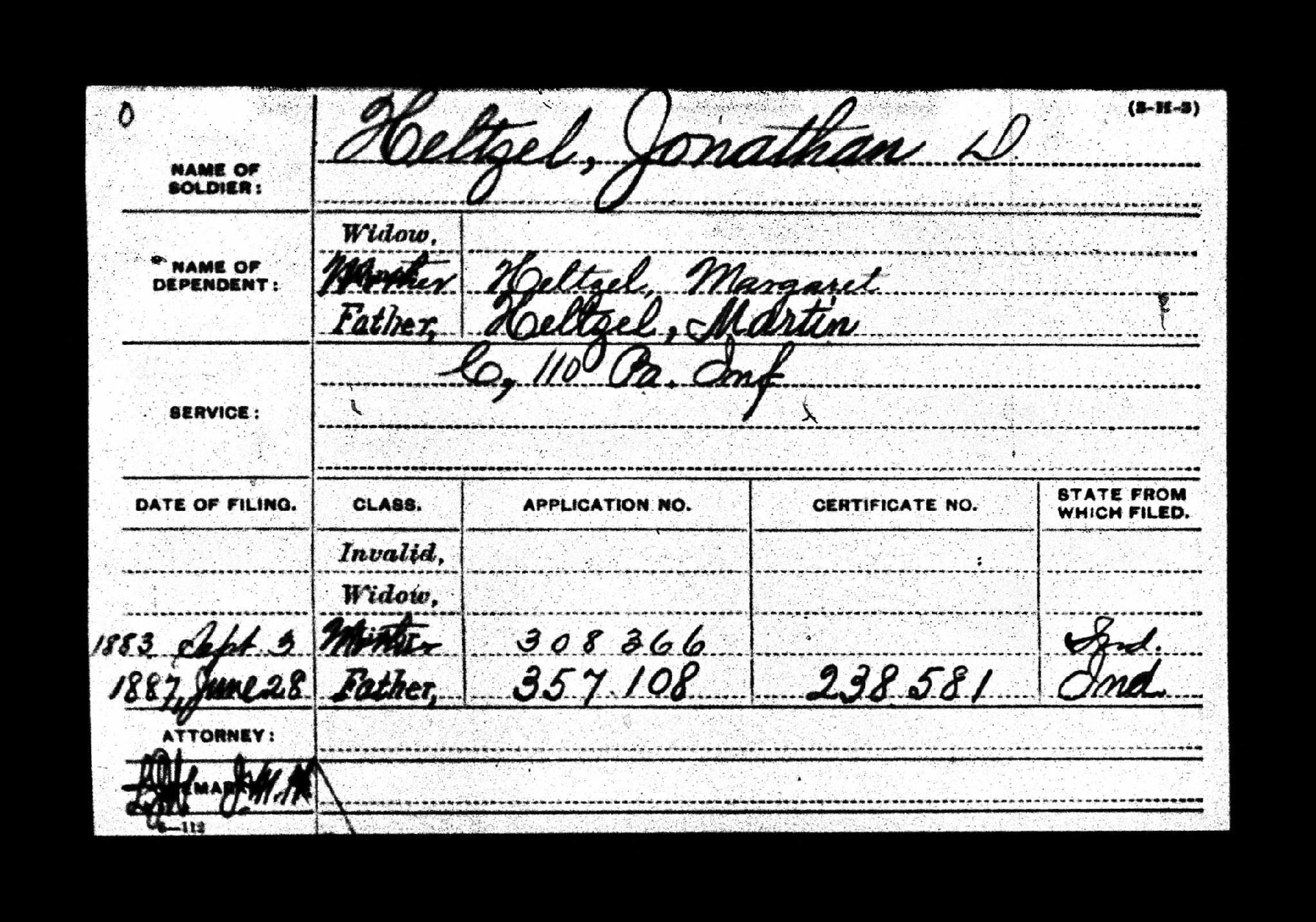
U.S. Civil War Pension Index — dependents listed: Father Martin Heltzel, Mother Margaret Heltzel.
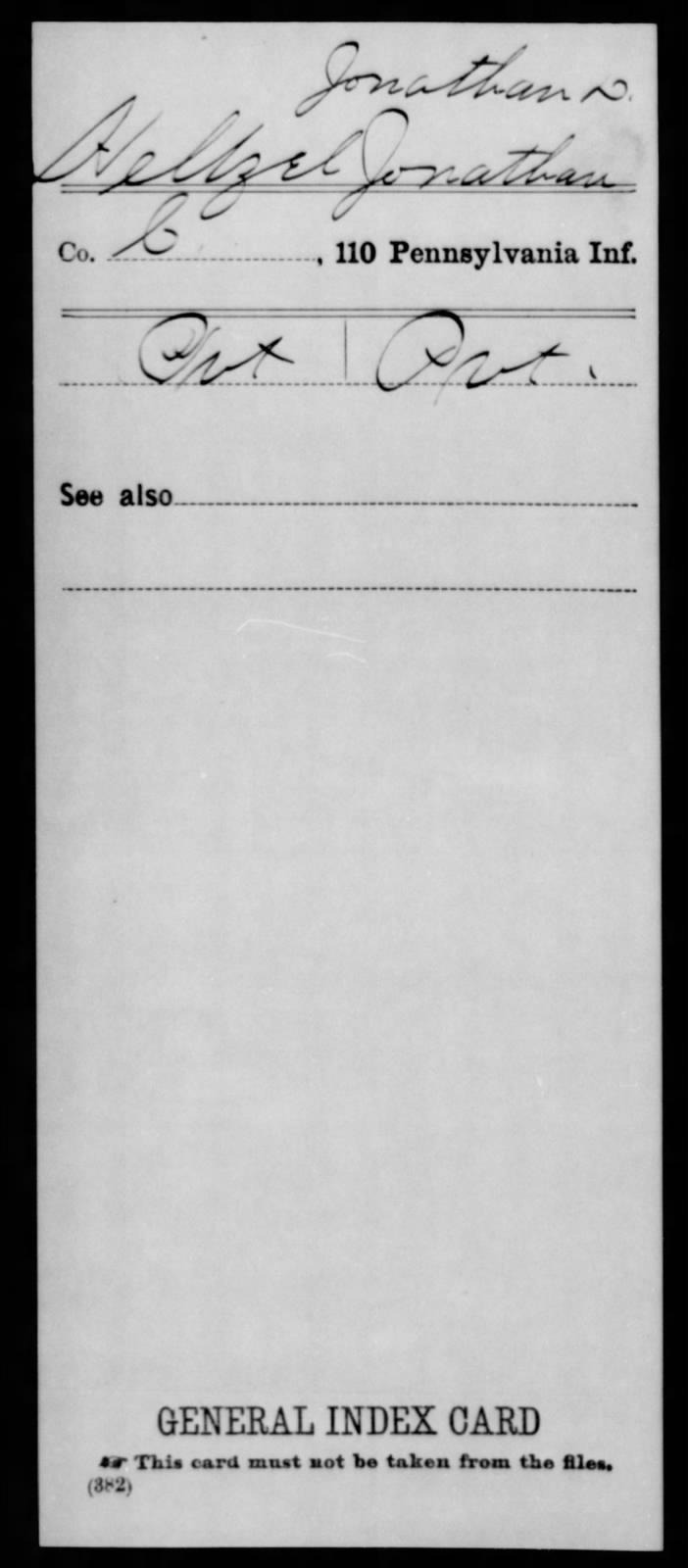
General Index Card, National Archives — Heltzel, Jonathan D., Co. C, 110th Pennsylvania Inf., Pvt.
Jonathan was a nephew of Solomon Heltzel, in our confirmed family line.
Jacob C. Stineman — The Monument Builder
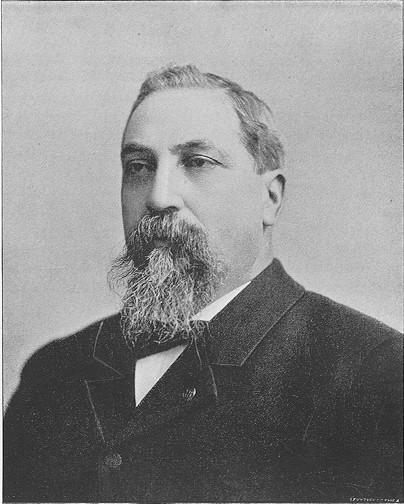
Senator Jacob C. Stineman (1841–1913).
The second connection is more of a twist. Jacob C. Stineman, who married into our Varner family in December 1866, was also a Civil War veteran — Company F, 198th Pennsylvania Volunteers, present at Lee’s surrender at Appomattox Courthouse. He went on to serve four terms in the Pennsylvania State Senate, and as a member of the Gettysburg Battlefield Memorial Commission, he personally oversaw construction of the Pennsylvania Memorial — the very arch that carries Jonathan Heltzel’s name.
So the young private who stood below Stony Hill and the statesman who later helped build the monument to honor him were both part of the same extended family, though neither ever knew it. One gave his life at twenty-two; the other spent his later years making sure names like Jonathan’s would never be forgotten.
Rest in peace, Jonathan. And thank you, Senator Stineman, for the stone and bronze that still keep his name standing at Gettysburg.
#Gettysburg #CivilWar #FamilyHistory #Genealogy #CambriaCounty #BedfordCounty #PennsylvaniaVolunteers
Sources
- Pennsylvania Veterans Card File, 1775-1948 — Heltzel, Jonathan D., Co. C, 110th Regt. Mustered in 10-24-61 as Pvt. at Bedford Co., Pa. Age 19. Residence: Woodbury, Pa. Remarks: Killed in action 5-6-64 at Wilderness, Va.
- Pennsylvania Memorial at Gettysburg National Military Park — NPS Searchable Database: “Heltzel, Jonathan, Private, 110th PA Infantry, Company C.” nps.gov/gett/learn/historyculture/pennsylvania-memorial-searchable-database.htm
- 110th Pennsylvania Infantry Monument, Gettysburg National Military Park — regiment fielded six companies (A, B, C, E, H, I), 152 men, 53 casualties. gettysburg.stonesentinels.com
- 110th Pennsylvania Infantry historical marker, De Trobriand Avenue, Gettysburg National Military Park — erected 1889 by the Commonwealth of Pennsylvania. hmdb.org (marker #15639)
- Photograph: 110th Pennsylvania Infantry Monument, De Trobriand Avenue, Gettysburg (110PA-4c_0976).
- 110th Pennsylvania Volunteers, Company C Muster Roll, in Bates, Samuel P., History of the Pennsylvania Volunteers, 1861-65, Harrisburg, 1868-1871.
- U.S. Civil War Pension Index Card — Heltzel, Jonathan D. Dependents: Father Martin Heltzel, Mother Margaret Heltzel. Filed 1883 (App. #308,366) and 1887 (App. #357,108, Cert. #238,581).
- General Index Card, National Archives — Heltzel, Jonathan D., Co. C, 110 Pennsylvania Inf., Pvt.
- The Bedford Inquirer, June 10, 1864 — “The Woodberry Company,” reporting Company C losses per letter from Pvt. William H. H. Shimer; lists Jonathan Heltzel among the Killed.
- U.S. Register of Deaths of Volunteers, 1861-1865, page 48 — Heltzel, Jonathan, Co. C, Regt. 110, Date of Death: 6 May 1864, Place: Wilderness, Va., Cause: Killed in Battle.
- Family relationship — established via cross-reference of pension card parent names (Martin Heltzel, Margaret Heltzel) against the confirmed family tree entry for Martin J. Heltzel (1816-1891), son of George Henry Heltzel.
- Jacob C. Stineman biography and obituary — The Gettysburg Compiler, April 9, 1913, and church publication biography, April 23, 1913.
- Photograph: “Co. C, 110th Pennsylvania Infantry after the Battle of Fredericksburg, April 24, 1863” — Ancestry.com user-contributed photo, added by Gary Stern, June 23, 2019.
