
Elizabeth (Donmyer) Reynolds — my 4th great-grandaunt
On the afternoon of May 31, 1889, the borough of Woodvale, Pennsylvania, simply stopped existing. It took less than ten minutes.
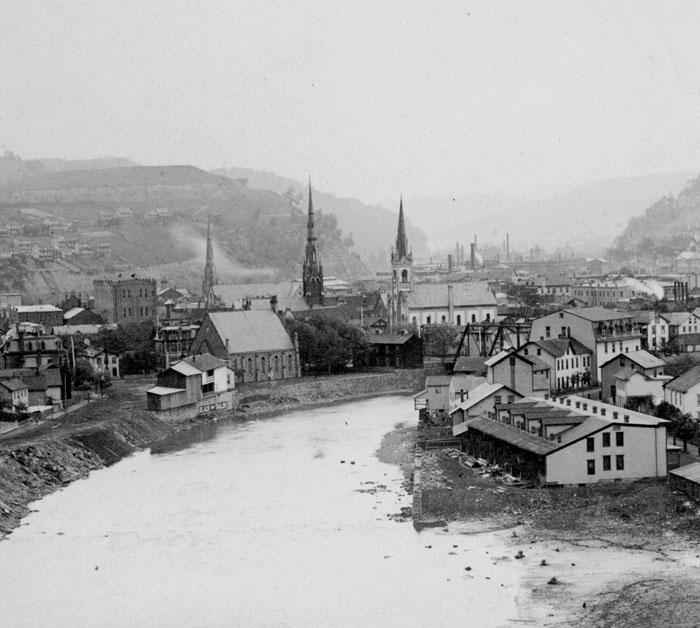
Johnstown before the flood. By 1889 some 30,000 people lived in the valley where the Little Conemaugh and Stonycreek rivers meet, drawn by the Cambria Iron Works and the mills along the water.
South Fork Dam, fourteen miles upstream from Johnstown, had been holding back Lake Conemaugh — a private mountain reservoir built for a fishing and hunting club used by some of Pittsburgh’s wealthiest families. After days of torrential spring rain, the dam gave way that afternoon, unleashing an estimated twenty million tons of water down the narrow Conemaugh Valley.
The dam had not been built for recreation. The Commonwealth of Pennsylvania constructed it between 1838 and 1853 as a feeder reservoir for the Western Division of the Pennsylvania Main Line Canal, whose eastern terminus was Johnstown itself — a way to keep water in the canal through dry summer months. Construction stalled for the better part of a decade, and the half-finished dam failed once, in 1847, before being completed. The canal went out of business in 1854, barely a year after the dam was finished. The Pennsylvania Railroad bought the whole system in 1857 and eventually sold the reservoir into private hands.
By the end of the 1870s the dam and its abandoned reservoir had passed through several owners since the canal folded, and had fallen into disrepair. Benjamin Ruff, a Pittsburgh-area coke dealer and former railroad tunnel contractor, bought the property in 1879 for $2,000 and organized the South Fork Fishing and Hunting Club as an exclusive summer retreat. Ruff recruited his friend Henry Clay Frick — then a young coke and coal operator on his way to becoming one of the richest men in America and, later, Andrew Carnegie’s partner in running Carnegie Steel — as a founding member. Frick in turn helped bring in other Pittsburgh industrialists, including Carnegie himself, by then the country’s leading steel manufacturer, and Andrew Mellon, still a young banker decades from serving as U.S. Treasury Secretary. Ruff, who had no engineering training, personally supervised the dam’s reconstruction. An earlier owner had already stripped out its cast-iron discharge pipes and sold them for scrap — the mechanism that would have let anyone draw the lake down in an emergency. Ruff’s crew rebuilt the dam without replacing them, lowered its crest by two to three feet so that two carriages could pass along the top, and fitted screens across the spillway to keep the club’s stocked game fish from escaping. Each change made the dam less able to survive a heavy rain, made in the service of a lake built for leisure.
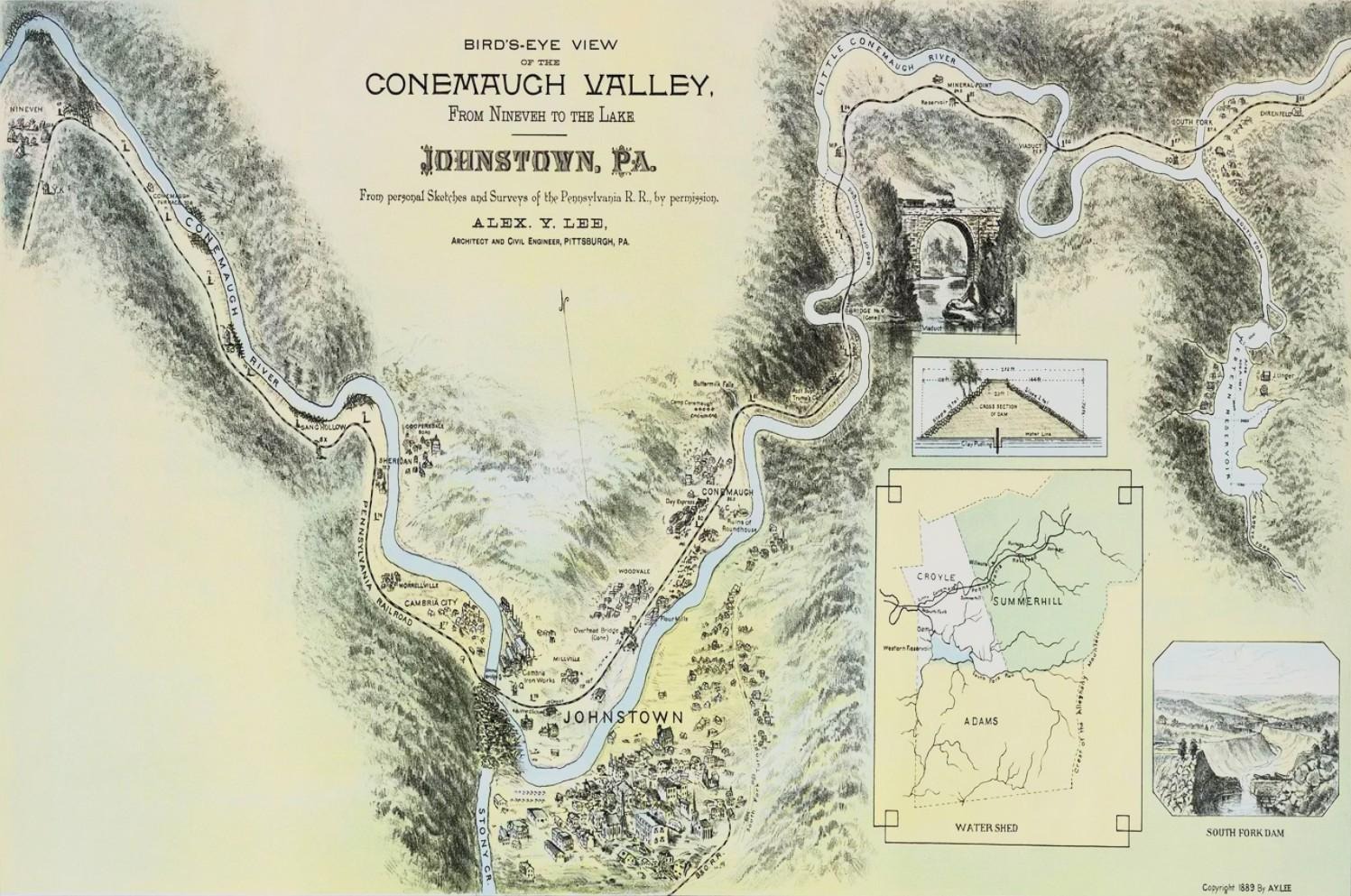
Bird’s-eye view of the Conemaugh Valley from Nineveh to the lake, drawn by Alex Y. Lee in 1889. The flood’s path runs from the Western Reservoir at upper right down through South Fork, East Conemaugh, and Woodvale into Johnstown.
The storm that broke the dam was one of the worst in the region’s recorded history. A powerful low-pressure system had tracked east out of Kansas and Nebraska in the last days of May, and by the time it crossed the Alleghenies it was dropping rain almost without precedent — six to ten inches across the watershed above Johnstown in roughly twenty-four hours, with more than six inches falling in a single seven-hour spell on the morning of May 31 alone. The ground could not absorb it. May had already brought eleven days of rain before the storm arrived, on top of a fourteen-inch April snowfall that had melted away almost overnight. Every stream feeding Lake Conemaugh was swollen at once, and the lake rose far faster than a dam with no discharge pipes and a spillway choked by fish screens could ever have released it.
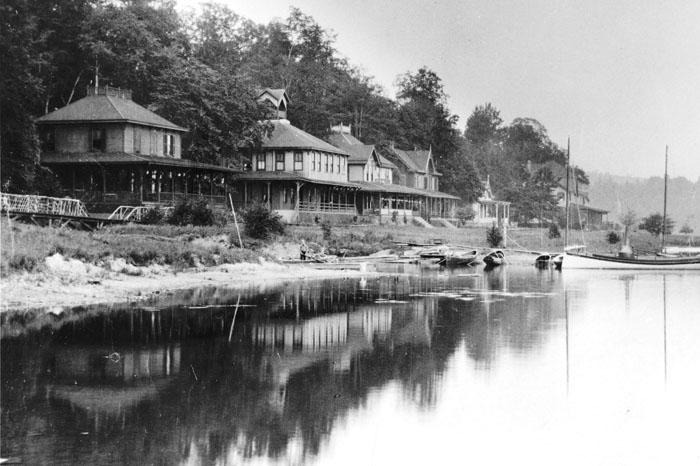
Cottages of the South Fork Fishing and Hunting Club on the shore of Lake Conemaugh, summer retreat of Pittsburgh’s industrial elite.
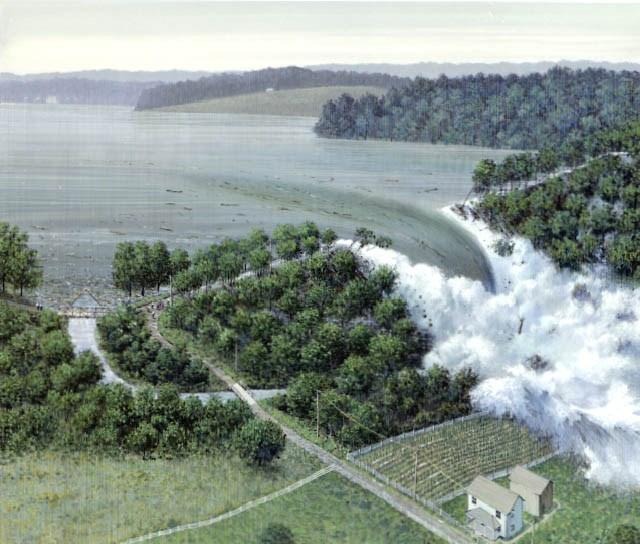
The final breach of the South Fork Dam, May 31, 1889.
Men worked on the dam all that morning. Colonel Elias Unger, the club’s president, woke on May 31 to find Lake Conemaugh had risen more than two feet overnight and was climbing roughly an inch every ten minutes. He put every man he could find to work — club employees, local men from South Fork, and a crew of about two dozen Italian laborers who had been installing a sewer line for the clubhouse and now had a new assignment: save the dam. Some plowed earth onto the crest to raise it. Others tried to clear the debris and fish screens choking the spillway. It was not enough. Around eleven o’clock the water reached the top of the dam, and Unger called the men off and ordered them to high ground.
Warnings did go out. John Parke, a young engineer working on the club’s sewer system, rode to South Fork and had messages telegraphed down the valley; at least three warnings were sent that day, the last reaching Johnstown at roughly three in the afternoon. But the South Fork dam had cried wolf before — there had been false alarms in previous wet springs — and the warnings were discounted. The dam failed at about 3:10 p.m. The water reached Johnstown at 4:07.
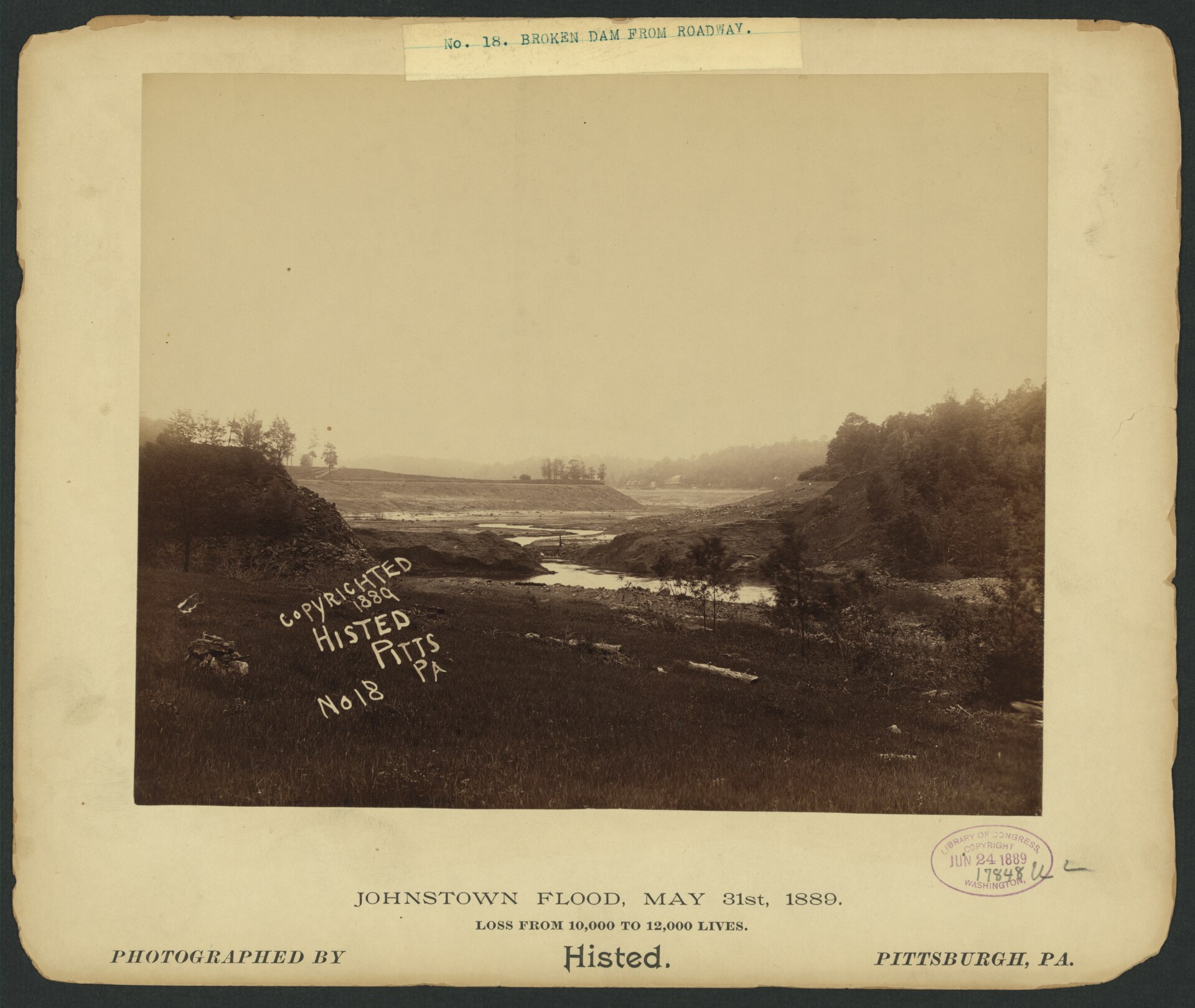
The broken dam from the roadway, photographed by Ernest Walter Histed in 1889. The lake is gone and the gap torn through the earthwork is visible at center. The mount’s printed caption puts the loss at 10,000 to 12,000 lives — an early estimate that ran far above the eventual count of 2,209.
One warning did work. As the flood bore down on East Conemaugh, just upstream of Woodvale, railroad engineer John Hess heard it coming, threw his locomotive into reverse, and ran backward toward the town with his whistle tied wide open. People heard it and ran for the hillsides. Hess’s engine was caught and thrown aside by the water, but he survived, and so did many who heeded him. About fifty people still died at East Conemaugh. Woodvale, the next town down, had no such warning.
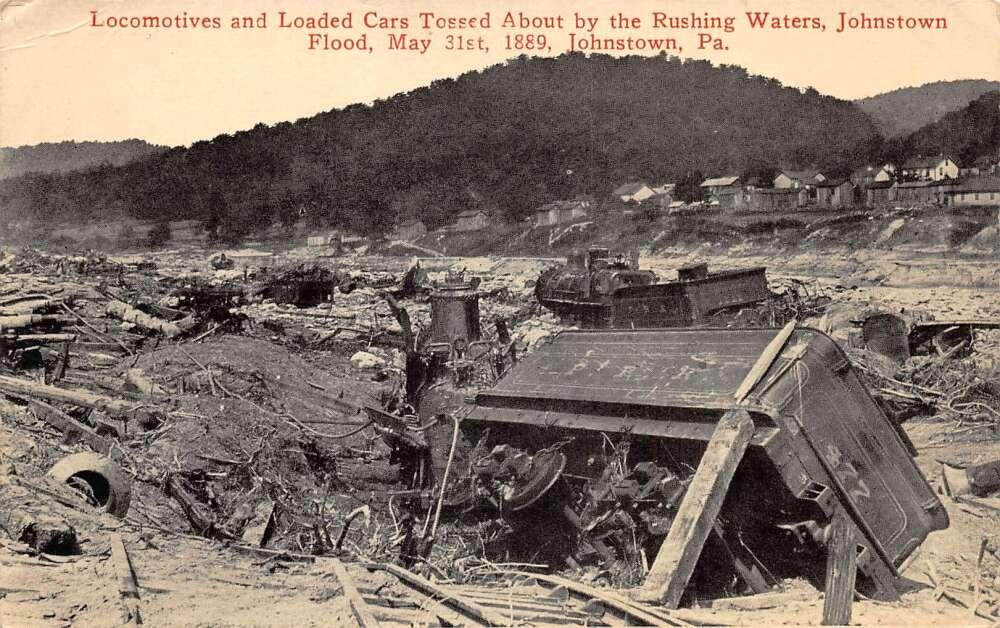
Locomotives and loaded cars tossed about by the rushing waters. The Pennsylvania Railroad’s roundhouse at East Conemaugh was destroyed and its engines scattered — among them John Hess’s.
By the time the flood reached Woodvale it was moving at an estimated forty miles an hour, carrying trees, railroad cars, entire houses, animals, and people. Woodvale — a tight mill town of about a thousand residents just outside Johnstown, home to the Cambria Iron Company’s woolen mill — sat directly in its path. More than 314 of Woodvale’s residents were killed in a matter of minutes, nearly a third of the borough’s population. At the Gautier wire works, boilers exploded as the water hit, and miles of barbed wire were torn loose and wound into the wreckage the flood carried on toward Johnstown.
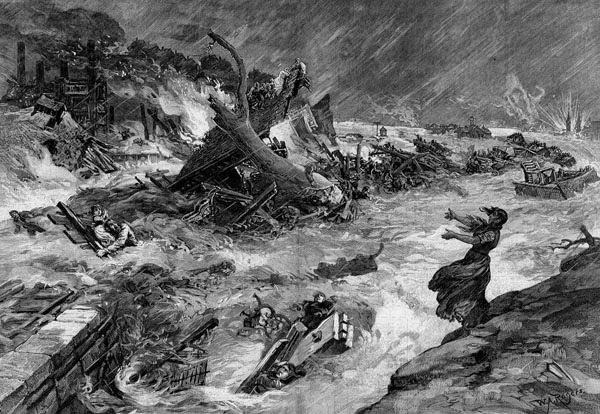
A period lithograph depicting the flood striking the valley — mill works burning at left, houses breaking apart in the current, and survivors clinging to debris.
Among the dead were Elizabeth Reynolds, age 40, and her daughter Idella Reynolds, age 14.
Elizabeth had been born Elizabeth Donmyer on June 6, 1847, in Richland Township, Cambria County, one of thirteen children of Lewis Donmyer Sr. and Catherine Shaffer, a farming family in the German-settled hill country east of Johnstown. She was baptized nearly three years later, on March 17, 1850, at a church in Elton, Cambria County — not unusual for the period, when families sometimes had several children baptized together. Census records trace her through the 1850s and 1860s still in her parents’ household in Richland Township, and by 1870 — two years before her marriage — she was listed as an unmarried adult “at home” in Adams Township. In 1872 she married Archibald B. Reynolds in Cambria City, and the couple settled in Woodvale, where they raised their family. They had at least two daughters: Idella, born around 1874–75, and Lucy, born in 1881, who survived the flood.
The 1880 federal census, taken nine years before the flood, records the family living together in the 2nd Ward of Conemaugh Borough: Archibald Reynolds, 33, a clerk at a planing mill; Elizabeth, 31, keeping house; and Idella, 6, at school.
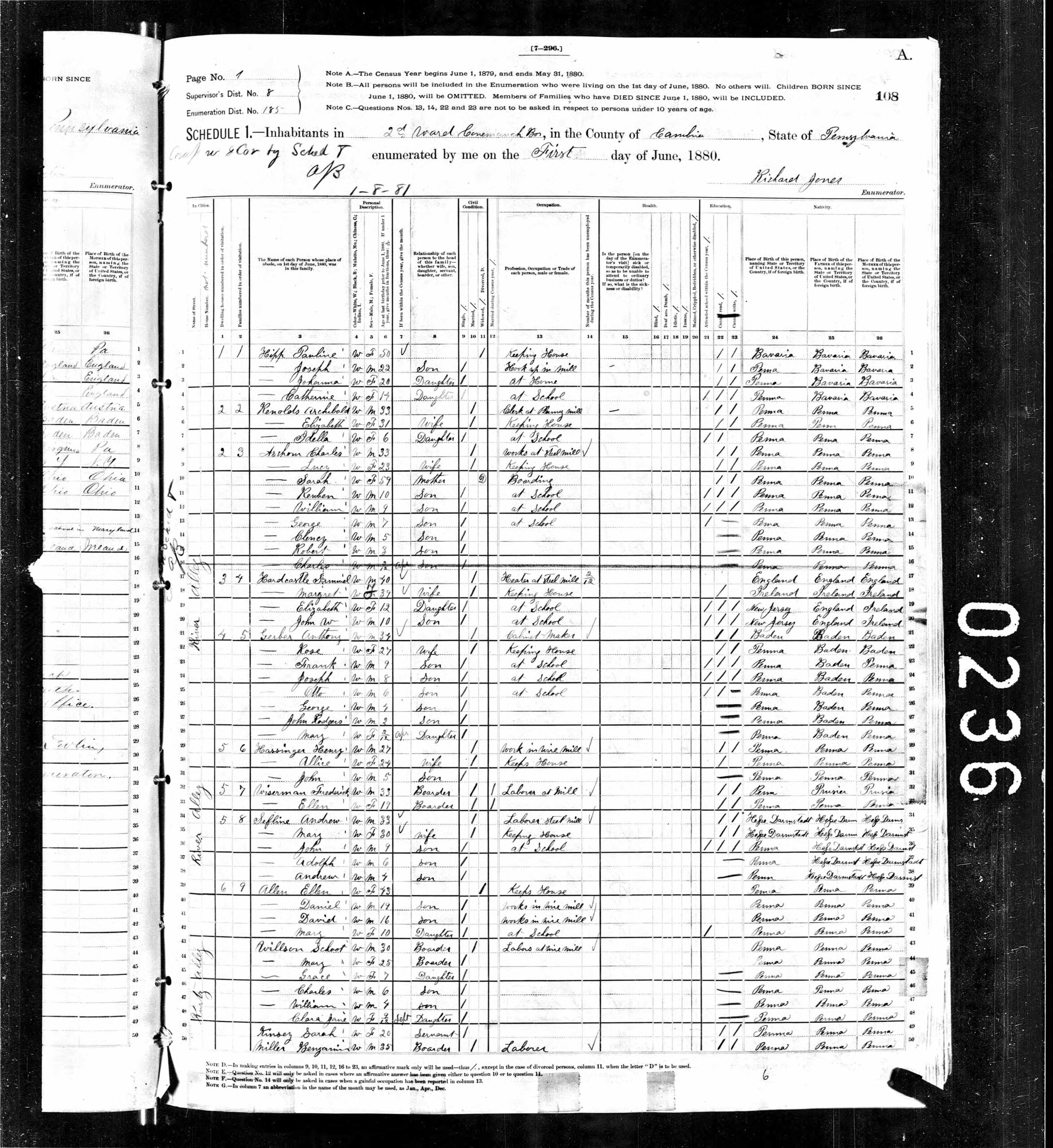
Archibald, Elizabeth, and Idella Reynolds, 1880 U.S. Federal Census, 2nd Ward, Conemaugh Borough, Cambria County, PA (household 2, family 2).
When the flood came, Elizabeth and Idella were swept away together.
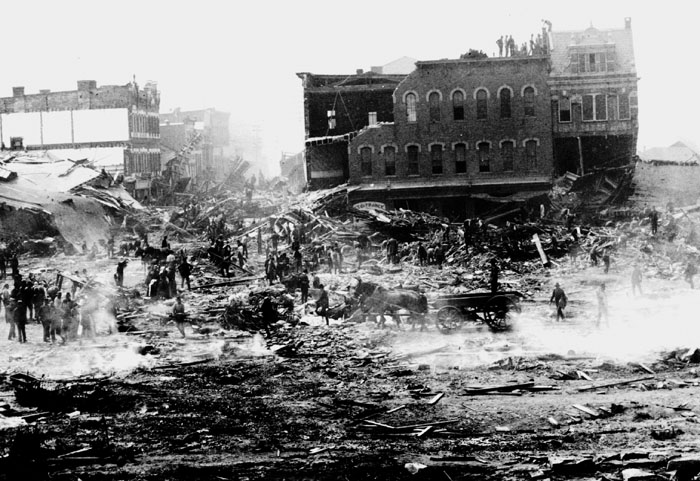
Site of Central Park after the Flood.
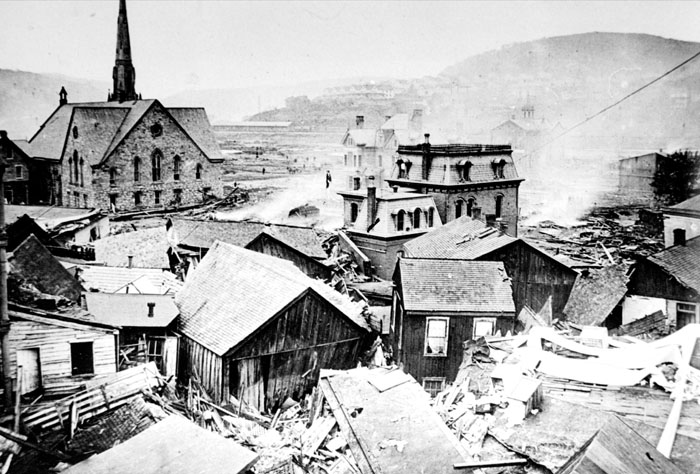
The Franklin St. Methodist Church in the background survived the flood and protected buildings behind it.
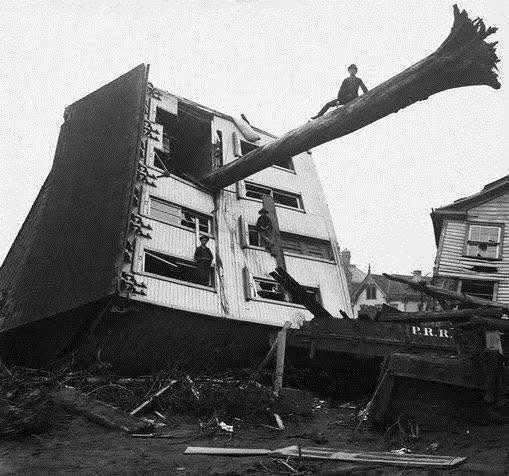
The John Schultz house on Union Street in Johnstown, pierced by a tree driven through it by the flood. All six people inside survived. The house became a tourist attraction afterward — the figure on the trunk is a sightseer posing for a photograph.
Their names appear in the official roll of the dead, first compiled by survivors and published in the Johnstown Tribune on July 31, 1890 — more than a year after the disaster, once the town had finished the agonizing work of accounting for who was missing and who was gone for good:
Reynolds, Mrs. Elizabeth, 40, Woodvale, missing.
Reynolds, Idella, 14, Woodvale, missing.
“Missing” was the list’s designation for victims whose remains were never matched to a name. Of the roughly 2,209 people killed in the Johnstown Flood, nearly a third were never identified at all, and a great many of those deaths happened at the same place: the Stone Bridge.
The Stone Bridge itself was not a casualty. Built by the Pennsylvania Railroad in 1887, its seven stone arches carried rail traffic across the point where the Little Conemaugh and Stonycreek rivers meet to form the Conemaugh, at the western edge of downtown Johnstown — and it survived the flood’s initial impact when almost nothing else in its path did. That strength is exactly what made it so lethal. As the wave reached Johnstown and slowed, everything it carried slammed into the bridge’s unmoving stone piers and jammed there: houses, railroad cars, trees, animals, people, and miles of barbed wire torn loose from the Gautier wire works in Woodvale. The debris field grew to roughly thirty acres and thirty to forty feet deep. That evening the wreckage caught fire — the exact cause was never determined, though oil from ruptured railroad tank cars is the most commonly cited culprit — and burned through the night. An estimated eighty people who had survived the flood itself, trapped in the debris against the bridge, died in the fire that followed.
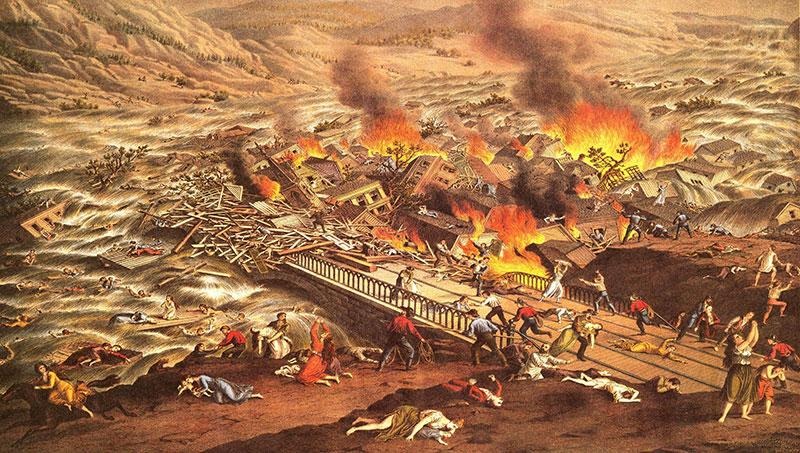
A period illustration of the fire that broke out in the debris jam at Johnstown’s Stone Bridge on the evening of the flood — one of the disaster’s most harrowing scenes.
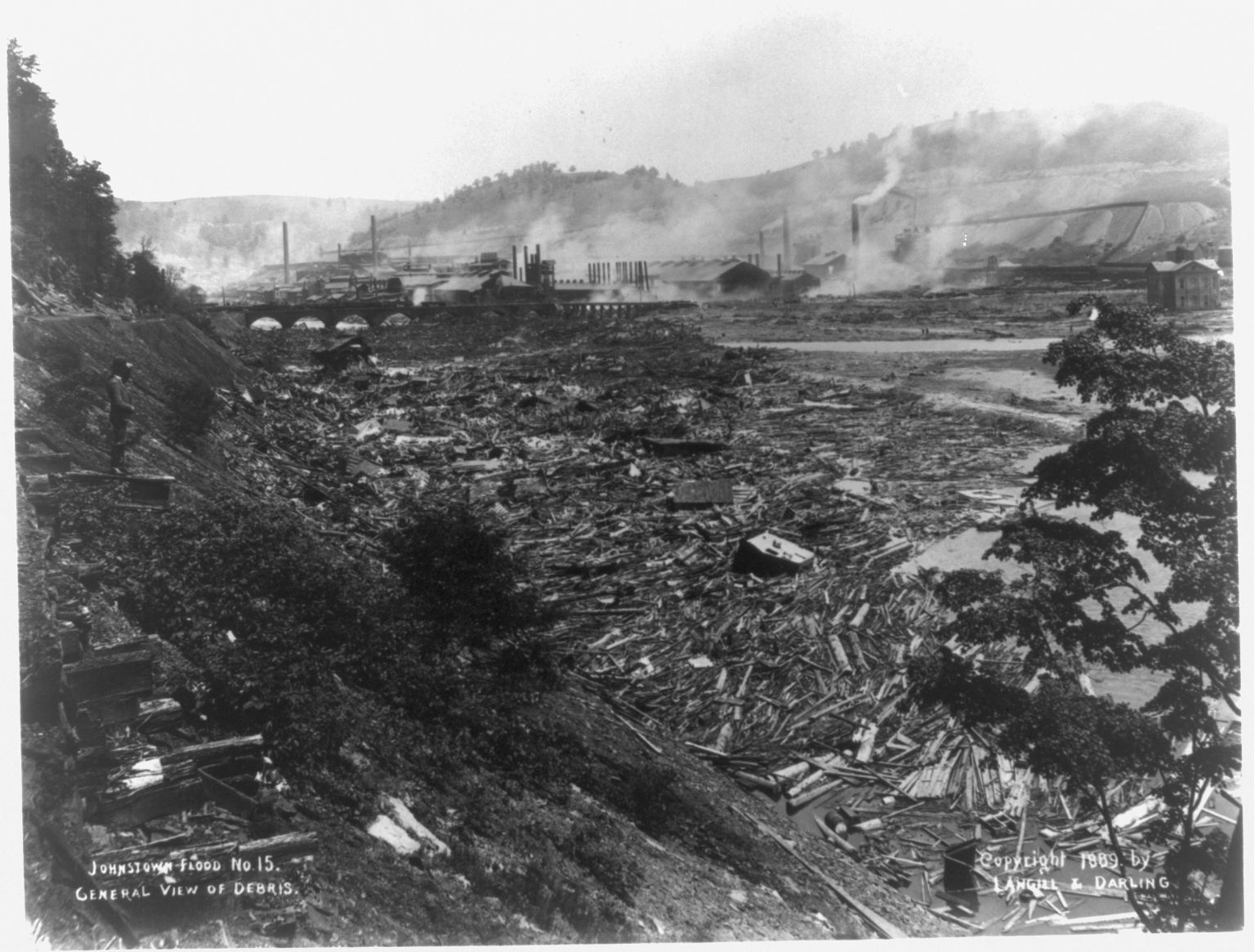
General view of debris jammed against the Stone Bridge, with the Cambria Iron Company’s mills visible in the background.
Grandview Cemetery in Johnstown holds a public plot for flood victims whose bodies were recovered but could never be identified — some 777 of them, buried together beneath a monument to the unknown dead.
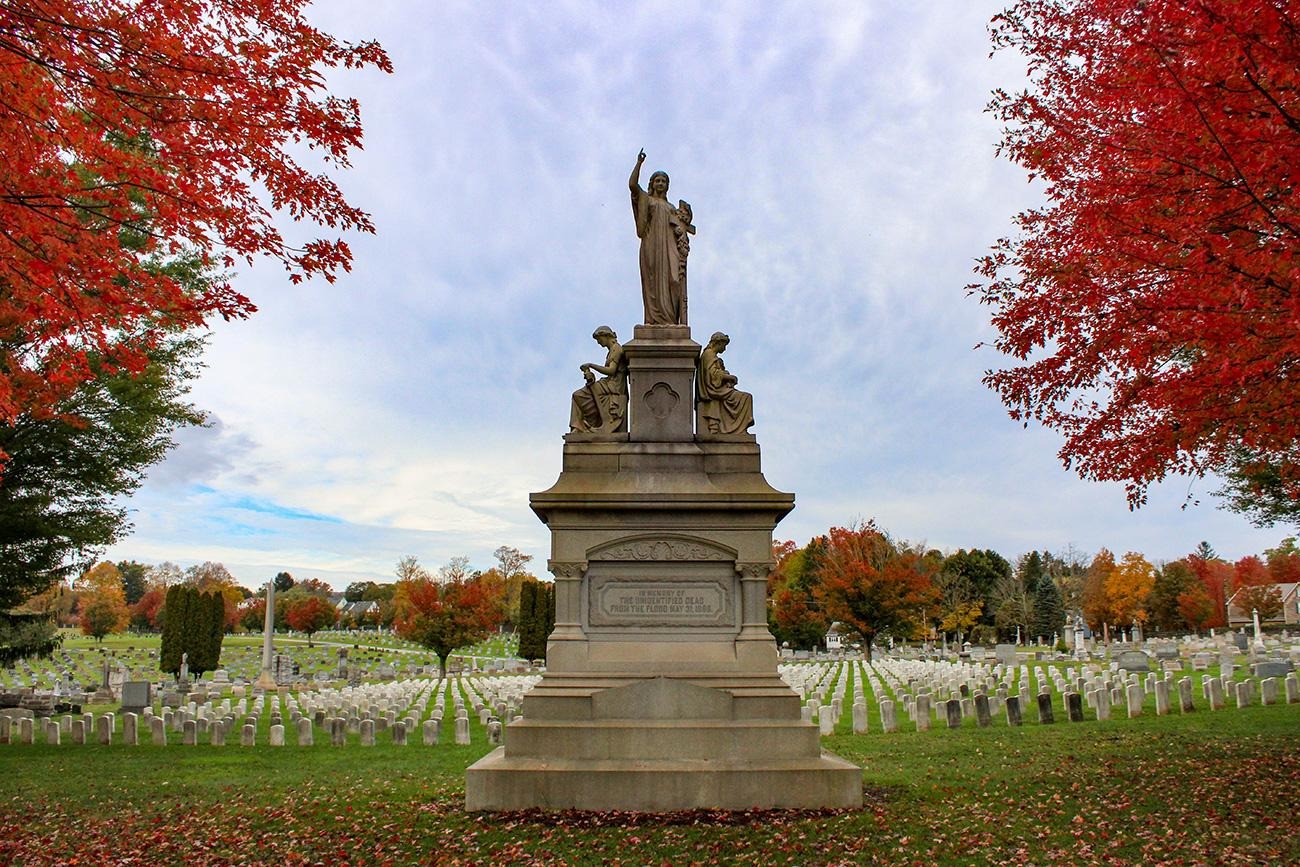
The monument at Grandview Cemetery, Johnstown, PA: “In memory of the unidentified dead from the flood, May 31, 1889.”
The unknown dead and the missing are two halves of the same accounting gap: bodies with no names, and names with no bodies. A victim was recorded as “missing” when no remains were ever matched to that person — but from the outside, that outcome looks the same whether nothing was recovered at all or whether a body was recovered that no one could identify. What can be said with certainty is that no remains were ever identified as Elizabeth’s or Idella’s. Whether they were never found, or were among the unidentified recovered and buried anonymously at Grandview, cannot be known. They may well rest beneath this monument.
Genealogical records nonetheless list Elizabeth’s date of death as May 31, 1889 — the day of the flood itself, rather than a later date established by any recovery or identification. That is the standard convention for a victim whose remains were never matched to a name: the disaster date stands in for a burial record that does not exist. A memorial for her exists today on Find A Grave, a modern, virtual marker rather than a physical headstone.
A portrait of Elizabeth survives in a family photo album: a formal studio photograph of a young woman in a striped dress, her hand resting on the arm of a chair. Beneath it, in the careful handwriting of a family member who kept the album afterward, is a single line — “Elizabeth Dornmyer Reynold — Lost in Johnstown flood.”
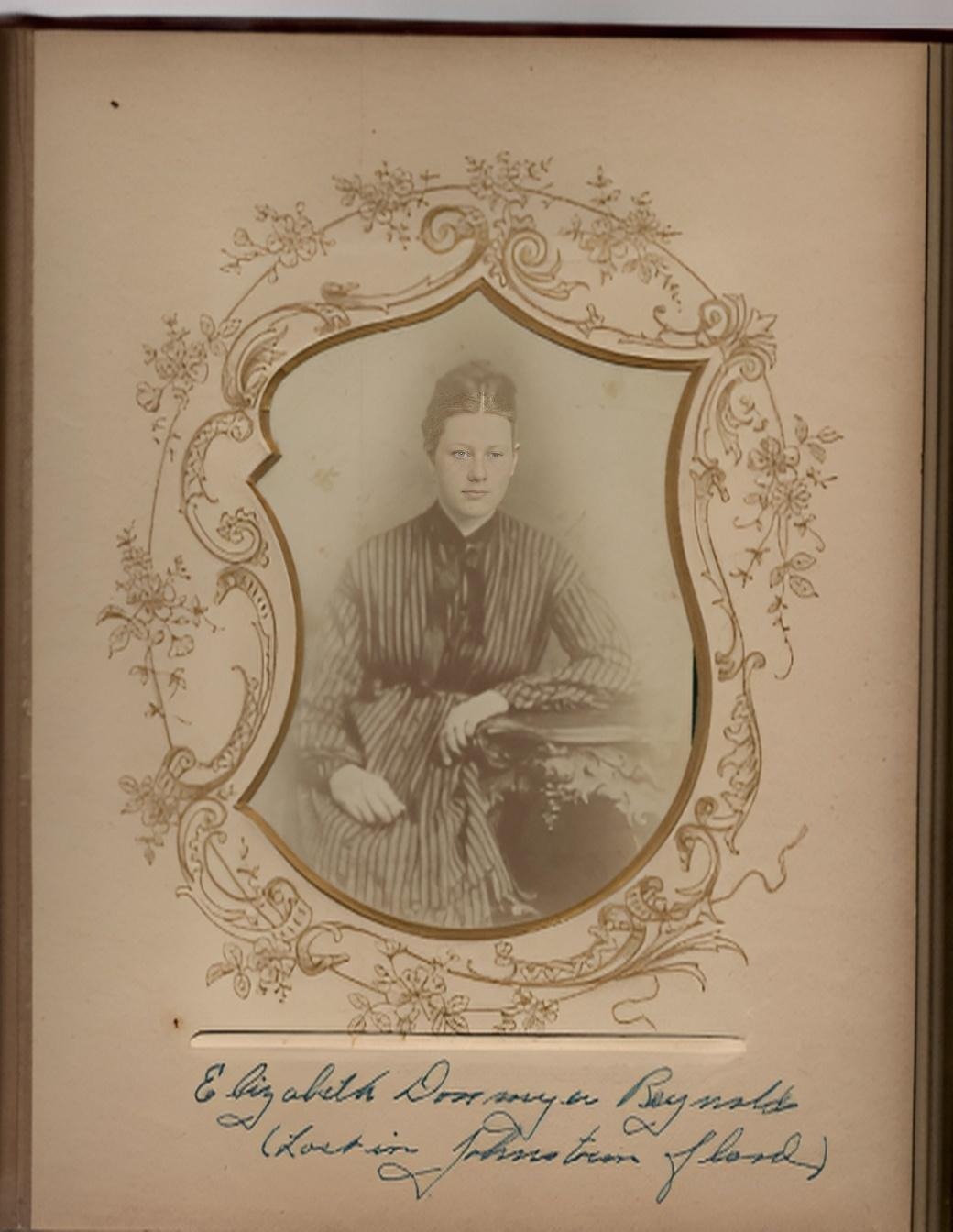
Elizabeth (Donmyer) Reynolds, from a family photo album.
Today, both Elizabeth’s and Idella’s names are recorded at the Johnstown Flood National Memorial, run by the National Park Service near the site of the old South Fork Dam, alongside those of the flood’s other victims.
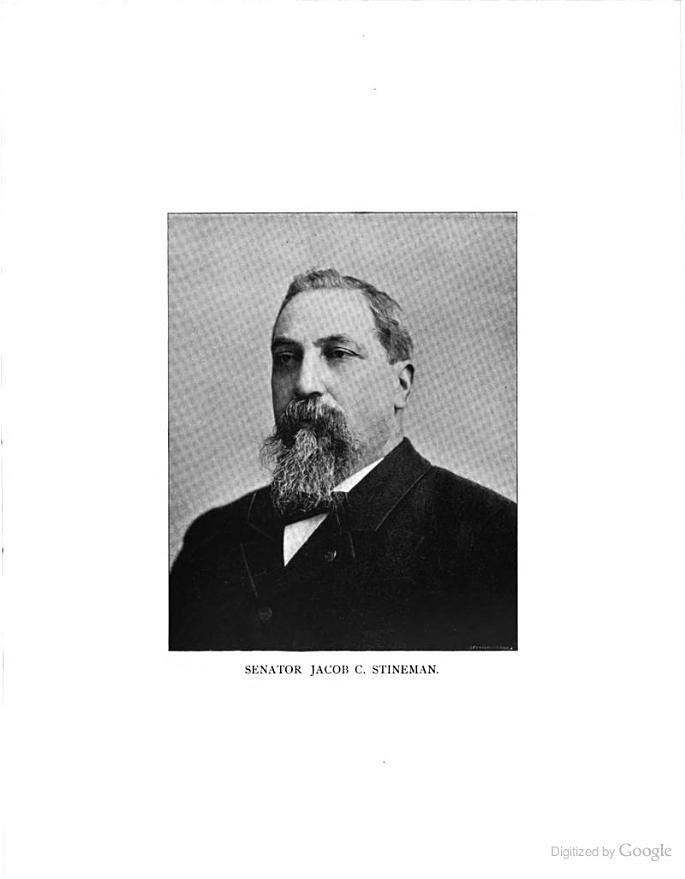
The published roll of the dead, as displayed at the Johnstown Flood National Memorial, showing both Elizabeth’s and Idella’s entries: “Reynolds, Mrs. Elizabeth, 40, Woodvale” and “Reynolds, Idella, 14, Woodvale.”
Elizabeth’s family had roots that reached beyond Cambria County. Her brother, Simon Peter Donmyer, left Pennsylvania in 1872 — the same year Elizabeth married — and headed west, eventually founding the town of New Cambria, Saline County, Kansas, naming it after the county he’d left behind. Brother and sister took very different paths out of Cambria County: one built a town on the plains that still bears its name; the other never made it out of Woodvale.
After the Flood
Archibald and Lucy survived. Archibald B. Reynolds, born November 16, 1846, in Richland Township, outlived his wife and older daughter by forty-five years. He remarried sometime before 1900, to a woman named Martha J.; by 1920 he was widowed a second time and living in Summerhill as his son-in-law’s father-in-law — in Lucy’s household. He died December 28, 1934, in Summerhill, Cambria County, not far from where Woodvale had stood.
Archibald “Archie” Reynolds, from a family photo album, inscribed “Arch Reynolds” in the same hand as Elizabeth’s portrait.
Lucy Reynolds was not yet eight years old at the time of the flood. On July 2, 1902, she married George W. Berghane in Cambria County; they settled in Summerhill, where her father would later live out his last years with them. Lucy died November 1, 1949, in Johnstown, and is buried in Summerhill.
One further loose thread: the same 1890 victims list that records Elizabeth and Idella also lists a “Reynolds, Columbia” of Conemaugh — a different Cambria County borough than the family’s Woodvale — also marked missing. No source consulted for this document connects Columbia Reynolds to Archibald and Elizabeth’s family. The shared surname is noted here, not assumed to mean anything.
The Club and the Aftermath
The failure of the South Fork Dam was not unforeseen. Daniel J. Morrell, general superintendent of the Cambria Iron Company — the firm that employed much of Johnstown and operated the Woodvale woolen mill — had warned the South Fork Fishing and Hunting Club that the dam was unsafe. He wrote to the club and sent an engineer to inspect the structure. Ruff wrote back on December 2, 1880, dismissing the concern: “You and your people are in no danger from our enterprise.” The club made no further changes. Morrell died before the flood, but his warnings survive as evidence that the disaster was foreseeable. He is buried at Grandview Cemetery, on the hillside above the plot that holds the flood’s unknown dead.
Daniel J. Morrell of the Cambria Iron Company, who warned the club its dam was unsafe and was ignored.
No member of the club was ever held legally liable. The club argued successfully that the flood had been an act of God, and courts found no individual negligence that could be pinned to any one member. Lawsuits were brought and went nowhere. About half the club’s roughly sixty members contributed to relief efforts afterward — Frick personally gave thousands of dollars, and Carnegie’s steel company gave $10,000 — but no member ever publicly accepted responsibility for what happened in the valley below their lake.
Andrew Carnegie later built Johnstown a new library. That building still stands, and today it houses the Johnstown Flood Museum, operated by the Johnstown Area Heritage Association — the institution that preserved and published the roll of the dead on which Elizabeth and Idella Reynolds’ names appear.
Andrew Carnegie, photographed by Theodore C. Marceau. Carnegie was a member of the South Fork Fishing and Hunting Club and, after the flood, funded the Johnstown library that now houses the Johnstown Flood Museum.
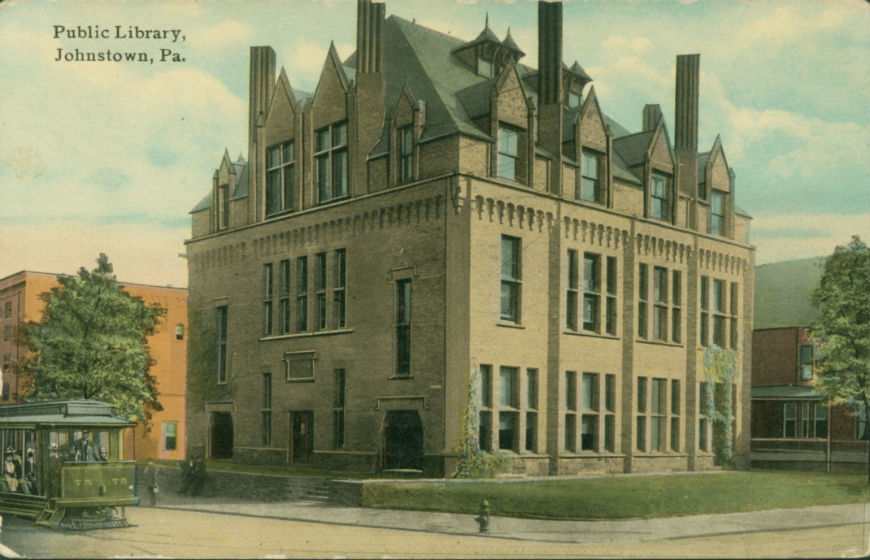
The Johnstown public library built with Carnegie’s gift, shown on a period postcard. The building houses the Johnstown Flood Museum today.
How Elizabeth Connects to This Family
Elizabeth’s own line of descendants did not continue in this family tree — her connection runs instead through her sister, Mary Donmyer. Mary’s daughter Margaret King married Jonathan Helsel, carrying the Donmyer family directly into the Helsel line documented in the family GEDCOM (family groups F221, F75, and F250):
In short: Elizabeth Reynolds was the sister of Walt’s 4th great-grandmother, Mary Donmyer King — making Elizabeth his 4th great-grandaunt.
Supporting Records
The parent family of Elizabeth and Mary Donmyer is documented in the 1850 federal census for Richland Township, Cambria County, showing Lewis Donmyer (listed as “Louis Dormayer”), a farmer with $9,215 in real estate, and his household including sons Jacob, Simon B., and Lewis Jr., and daughters Susanna, Sarah, Catherine, and others.
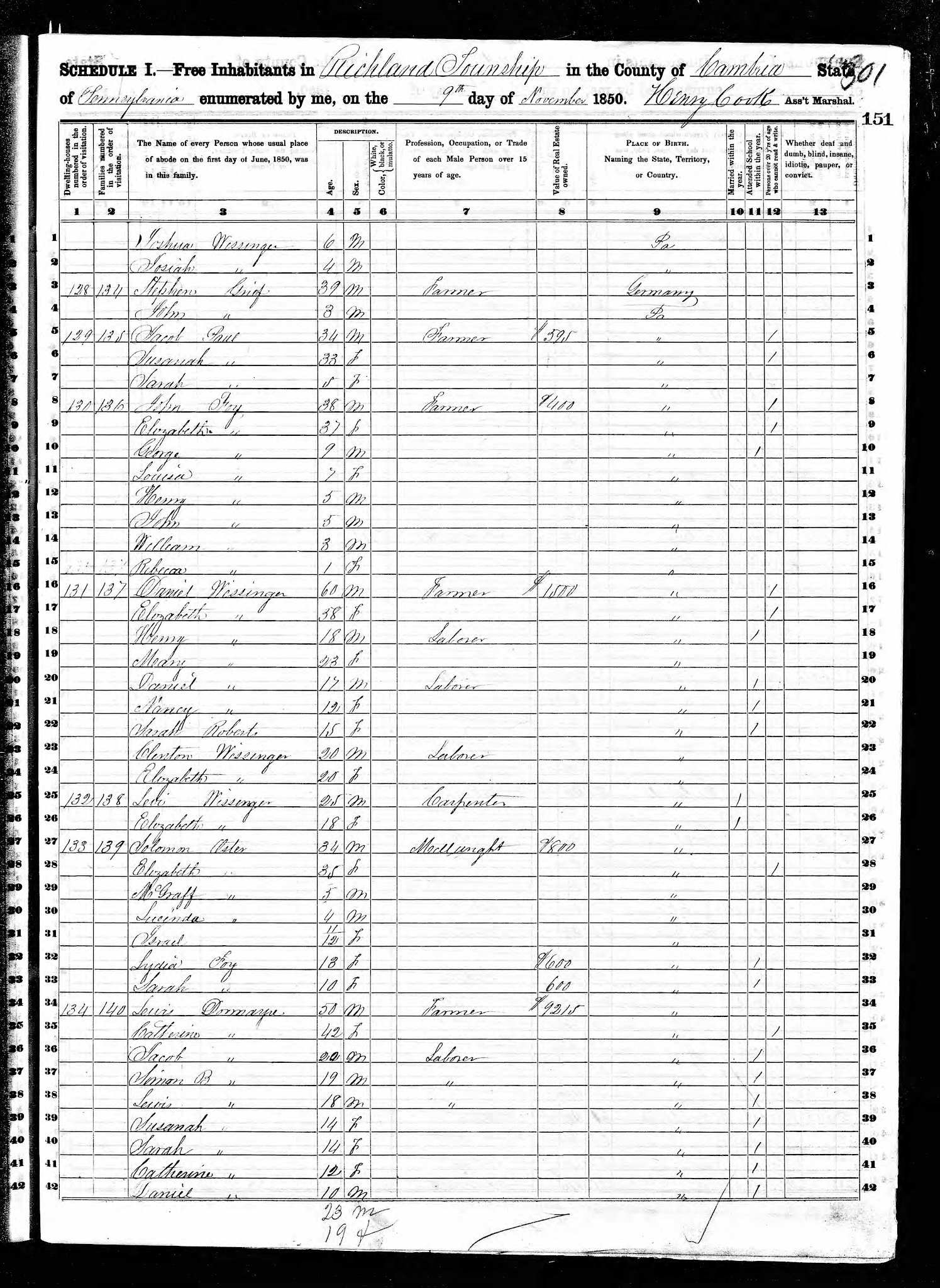
Lewis Donmyer (“Dormayer”) household, 1850 U.S. Federal Census, Richland Township, Cambria County, PA (dwelling 134, family 140).
Note on a source discrepancy: this 1850 census lists Lewis’s age as 58, which would place his birth around 1792 — several years earlier than the December 1799 birth date recorded elsewhere in the family GEDCOM (sourced to Findagrave and additional records). Age misreporting of this kind is common in 1850-era census records, and it does not affect the identification of the family; it’s noted here rather than smoothed over, per this family history’s practice of flagging rather than resolving discrepancies without further primary documentation.
Sources
Johnstown Tribune, July 31, 1890 — original published roll of the victims of the 1889 Johnstown Flood, organized by burial location; sourced via the Johnstown Area Heritage Association / Johnstown Flood Museum (jaha.org)
South Fork Fishing and Hunting Club membership records and Benjamin Ruff biography, Johnstown Area Heritage Association / Johnstown Flood National Memorial (NPS); Ruff-to-Morrell correspondence, December 2, 1880, per Association for State Dam Safety Officials case study and NPS historical materials
South Fork Dam construction history, canal-era origins, and 1889 timeline: National Park Service, Johnstown Flood National Memorial, “The South Fork Dam” and site interpretive materials (nps.gov/jofl)
Storm and rainfall data: U.S. Signal Service Monthly Weather Review, June 1889; Johnstown Area Heritage Association, “The Great Storm in the Conemaugh Valley”; Weather Underground historical analysis of the May 1889 storm system
Accounts of Colonel Elias Unger, engineer John Parke, and the warnings telegraphed from South Fork: National Park Service, Johnstown Flood National Memorial FAQ (nps.gov/jofl); Johnstown Area Heritage Association
“Johnstown Flood No. 15, General View of Debris,” copyright 1889 Langill & Darling; Library of Congress Prints & Photographs Division
John Schultz house photograph, George Barker, 1889; identification per Johnstown Area Heritage Association and Library of Congress Prints & Photographs Division
Family photograph and handwritten album caption of Elizabeth (Donmyer) Reynolds
Family photograph and handwritten album caption of Archibald “Archie” Reynolds
1880 U.S. Federal Census, 2nd Ward, Conemaugh Borough, Cambria County, PA — Reynolds household
1850 U.S. Federal Census, Richland Township, Cambria County, PA — Donmyer household
Johnstown Flood National Memorial, National Park Service
Stone Bridge history and 1889 debris fire: Johnstown Area Heritage Association, “Facts about the 1889 Flood” (heritagejohnstown.org); National Park Service, Johnstown Flood National Memorial
Grandview Cemetery, Johnstown, PA — monument to the unidentified dead of the 1889 flood; Unknown Plot dedicated May 31, 1892, containing 777 unidentified victims per the cemetery’s original interment register
Andrew Carnegie portrait by Theodore C. Marceau; public domain
Daniel J. Morrell portrait, Brady-Handy Photograph Collection, Library of Congress Prints & Photographs Division
“Broken Dam from Roadway,” No. 18, photographed by Ernest Walter Histed, copyright 1889; Library of Congress Prints & Photographs Division
“Bird’s-Eye View of the Conemaugh Valley, from Nineveh to the Lake,” Alex Y. Lee, architect and civil engineer, Pittsburgh; copyright 1889
Period postcards: “Locomotives and Loaded Cars Tossed About by the Rushing Waters” and “Public Library, Johnstown, Pa.”
Panoramic photograph of Johnstown prior to the 1889 flood
Daniel J. Morrell’s warnings to the South Fork Fishing and Hunting Club, the club’s legal aftermath, and Andrew Carnegie’s library donation: Johnstown Area Heritage Association, “The Club and the Dam” (heritagejohnstown.org)
Biographical sketch of Simon P. Donmyer, Kansas: A Cyclopedia of State History (Blackmar), and New Cambria, Kansas historical materials
Johnstown Area Heritage Association, jaha.org, for general background on the flood and Woodvale
Family GEDCOM (families F70, F71) and Ancestry Family Tree, U.S. Federal Census (1900–1930), and Pennsylvania death certificate records for Archibald B. Reynolds (b. 1846, d. 1934, Summerhill, Cambria Co.), his second wife Martha J. Reynolds, and Lucy (Reynolds) Berghane (b. 1881, d. 1949) and her husband George W. Berghane, married July 2, 1902
Historic Pennsylvania Church and Town Records (Historical Society of Pennsylvania) for Elizabeth Donmyer’s baptism, March 17, 1850, Elton, Cambria Co.; 1850, 1860, 1870, and 1880 U.S. Federal Census records for her pre-marriage residences
Find A Grave memorial no. 84258156, Elizabeth Reynolds
