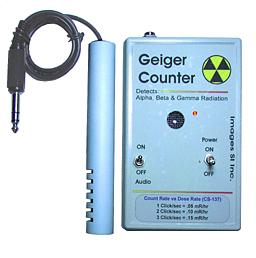
To begin this section it is important to first mention and stress that no item, piece of equipment or gadget exists that will directly detect the presence of an apparition. All of the devices and tools you see here are only used to detect changes in the surrounding environment brought about by possible spirit activity, which may indicate their presence or existence.
Basic Items
When gathering equipment for conducting paranormal investigations, nothing can be more important than the basic pen and paper for taking notes. It seems you can almost never take down enough information during an investigation. We use various forms to aid us in collecting and organizing all of our data, note taking and information. It is helpful to bring a watch or timer along in order to log the exact time of various events.
Flashlights are common sense and must-have items on any investigation. Look for LED flashlights because they produce the highest quality, longest lasting light and don’t consume as much battery power as normal lights. We also use special infrared flashlights alongside normal flashlights. The infrared light allows us to illuminate areas while still in total darkness. Infrared cameras, such as Sony with NightShot capabilities, are then used to pick up the infrared light.
We like to primarily use strap-on headlamps with an elastic band that can pivot up and down to change direction. This frees up our hands during investigations. It’s also helpful to have night vision (red LEDs) as well. Night vision enables your eyes to better adjust to the darkness, and when in use, red LEDs don’t use up as much battery life as white light.
Two-way radios are other items no investigation should be without. Each member of our team uses a two-way radio to keep in contact at all times. This is helpful if you choose to split up and need to relay information back and forth.
Other requirements are an emergency medical kit and spare batteries. It can’t be stressed enough to know your equipment, know what types of batteries the equipment takes, and always bring extra batteries.
Another item you may want to consider using is a compass to detect changes in DC magnetic fields. Compasses are a cheap way to do that without having to purchase expensive DC gauss meters.
Camcorders
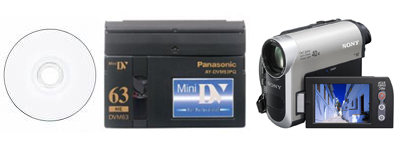
Current video cameras are very small, lightweight, easy to use, provide digital video and are a must-have on investigations to properly document places, interview witnesses, and monitor areas and other equipment. Video evidence of an apparition is one thing we strive for, as do most paranormal researchers, and is considered one of the holy grails of evidence.

Most current video cameras (camcorders) record onto small MiniDV tapes, MiniDVDs, or directly onto a hard disk built into the camera. Newer models will also have built-in USB ports for transferring the video to a PC. The MiniDV tapes record up to 60 minutes of high quality video, while MiniDVDs record around 30 minutes. Hard Disk Drive (HDD) cameras record around 7 hours or more depending on the amount of storage capacity. All formats can record in longer length, but only the average high quality mode recording settings are listed here. Low quality settings allow for longer recording times, but the image quality suffers greatly. High quality recording should be used at all times.

All camcorder formats have their pros and cons. MiniDV has the best video quality because the video is not compressed as much as the other standards. A new high definition version-recording format is also available for it. It records at about 25 megabits per second (Mbps). Both MiniDVD and HDD devices use MPEG-2 compression and this can greatly affect video quality depending on the amount of compression you use. Video from MiniDVs and HDD camcorders can only be played inside the camcorder and hooked up through a TV if you want to watch the video, unless you transfer the video to a DVD or PC, which can be time consuming.
One of the most important things to look for when purchasing a camera is the ability for it to capture infrared light at night. Apparitions are thought to possibly exist in the infrared light spectrum, which we cannot see with our naked eyes. Any Sony camera with NightShot capabilities will allow you to shoot in total darkness and film the infrared light.
NightShot cameras give off an infrared light beam that human eyes cannot pick up. Objects are illuminated and recorded onto the camcorder. You can even buy infrared arrays or infrared flashlights to give you more infrared light for recording. Anyone who has tried to film in darkness without NightShot knows how hard it is, so a camera that can film in darkness is a must-have.
Other important features of a good camera include a high optical zoom. Don’t pay much attention to digital zoom strength because the image quality distorts greatly if it is used. Be sure to have a decent size carrying case along with extra rechargeable batteries and fresh tapes/MiniDVDs.
Audio Recorders
Digital Voice Recorders
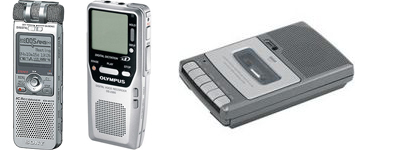
Purchase the highest quality sound recorder you can afford with the most memory you can, for maximum recording time and sound quality. We usually download the audio from our recorders to a PC after a certain period of time so we are able to keep recording without filling up the memory. A typical DVR with 64MB of memory will record up to 4 hours of high quality sound. Look for recorders that have a high frequency response, as they will pick up more audio frequencies.
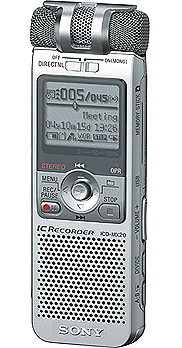
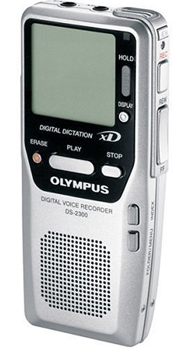
Human ears can pick up between 15 to 20,000Hz, so you want an audio recorder that can at least pick up within that range as well. Another nice feature to have is stereo recording capabilities. It will allow you to pinpoint where audio is coming from when you play it back to analyze on computer software. Be careful not to bump or rub your fingers near the recorder’s microphone because digital audio recorders are very sensitive and will pick up those sounds.
Digital voice recorders record in a few different formats that include DSS (Digital Speech Standard), WMA, WAV, and even MP3. All formats except for WAV files compress the audio to some degree so you may want to try looking for a recorder that can record WAV files for the best quality sound.
We use a variety of sound mixing programs, including Audacity, and high quality stereo headphones to try and listen for EVPs. Audacity is free to download. It gives you a visual interpretation of the audio so you can easily pick out unusual audio spikes or simply detect where sound is to review.
When recording, it may be a good idea to make audible notes during the investigation. This will help you with keeping track of different times, locations and events.
Cassette Tape Recorders

Most of our experiences with analog cassette tape recorders tend to produce a great amount of background noise and hiss. Some say it is still possible to get good results by using them but we usually stick to digital audio recorders for our use.
If using a cassette recorder, always try and use an external microphone with it. The internal sounds of the gears moving will be picked up while recording and will obscure any possible EVPs. Also try to get a recorder with an analog counter on it so you can keep track of where you are recording on the tape for future reference and review.
Never use old tapes when recording. The sound quality will degrade when trying to record over used tapes and may cause previously recorded noise and voices to bleed through when being played back.
EMF Meters
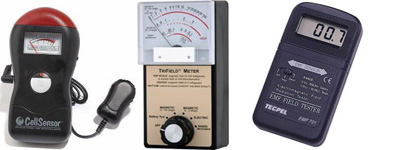
EMF meters (Electromagnetic Field or Gauss meters) are not used to detect ghosts! They are primarily used to try and detect possible disturbances in electromagnetic radiation of surrounding areas caused by spirit activity or harmful effects of EMF on humans.
An EMF is basically the magnetic strength given off by an object when electrical current is passed through it. Most EMF meters are calibrated for 60Hz AC because they are normally used to detect EMFs emitted from standard electronic devices or power lines that cycle at 60Hz AC. The units they measure in are called milligausses. 1 milligauss = 1/1000 Gauss.
Inside an EMF meter is a coil of thin wire, typically with hundreds of turns. As a magnetic field radiates through the coil, it produces current, which is amplified by the circuits inside the meter. This is how you get the measurements.
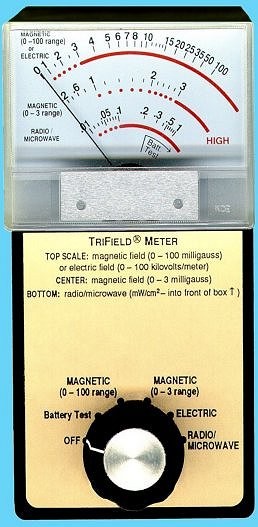
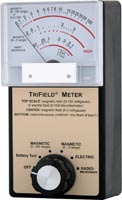
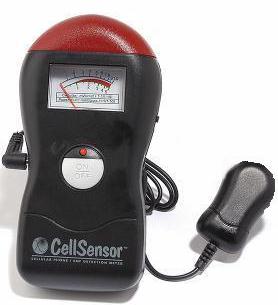
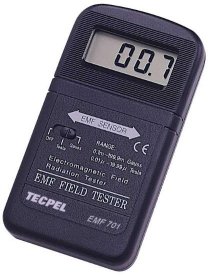
Most cheap EMF meters are single axis, which means they will only detect signals coming from one direction. If you have one of these meters, be sure to rotate the meter around so as not to miss any signals. The best meters to get are 3 axis meters that will allow you to pick up signals in all directions without having to rotate the meter.
You can get either frequency weighted or non-frequency weighted meters. Try out each one to see what works best for your research. Frequency weighted meters give you a reading that is proportional to the frequency of the field strength and its effects on the human body. Example: 3mG field strength @ 60Hz would read 6mG @ 120Hz on a frequency weighted meter.
EMF meters are mostly used to detect extremely low frequencies (ELF) between 3 to 60Hz or frequencies too low for usual communication. There is no way of actually measuring the frequency given off by an object with most standard EMF detection tools. High exposure to frequencies in this range cause electrical current to flow through our bodies, which can cause harm to our brains and other parts of our body.

Ruling out EMF exposure is helpful when conducting investigations because high EMF exposure can sometimes cause people to see things that are simply not there. Make sure you check to be sure the EMF you are reading is not coming from a natural source. Often high EMFs are emitted from appliances, electronic equipment, or power lines, so rule those items out before considering spirit activity. Low EMF readings (1 to 8mG) are said to indicate spirit activity. Normally very high readings are caused by artificial sources.
Cameras
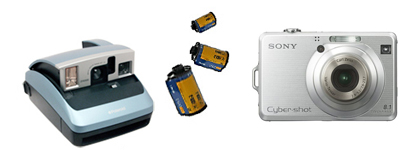
It seems almost any type of camera will work to photograph spirits. Below are types of cameras you can use to help capture a spirit on film and some information about each type. Here are some tips you can use while conducting spirit photography:
- Make sure your lens is clean.
- Use a fully recharged battery or fresh batteries if using a digital camera.
- Never film in poor weather conditions, or areas with a lot of dust or moisture.
- Avoid shooting towards the sun to reduce lens flare.
- Never take photos when someone is smoking.
- Tie back all loose hair, jewelry, and camera straps. Camera straps or anything dangling in front of the camera while taking a picture can appear as a “vortex”.
- Announce when taking pictures if you are in a group to prevent others from filming each other’s flash.
- Take pictures only in black and white when outdoors in dark areas. This will help you to better distinguish between different objects.
- Turn on the date/time feature if your camera supports it in order to help keep track of photos.
- Know how to operate the camera and all of its features, so you aren’t fumbling in the dark trying to figure it out.
- Hold your breath when snapping a photo to prevent breath from your mouth appearing on film in cold weather conditions.
35mm Film
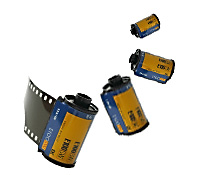
Basic film cameras work great for paranormal investigations. They provide you with a negative of the film so in the event you photograph something you can go back and verify it with the negative. Select high-speed films such as ASA 400 or 200 when taking photos at night and slower speed film such as ASA 600 or 800 when photographing in the daylight.
Digital Cameras

Digital cameras make spirit photography very high tech and easy. They allow you to take almost as many pictures as you want and review them instantly if you have a built-in view screen. When using digital cameras you want to use the highest quality camera, with the highest resolution for the best results. An equivalent resolution to a 35mm camera is anywhere from about 10 megapixels on up, so you’ll want a very high-resolution camera.
We have gotten good results from both low megapixel and high megapixel cameras. It is advised to save your photos in RAW, TIFF, or PNG format. These formats provide more details and less distortion than compressed formats such as JPEGs. Low light conditions can cause a lot of motion blur so you may want to use a tripod when photographing at night. Low light conditions can also cause orbs to appear. Many orbs are thought to be microchip processing errors that occur when the camera is trying to fill in something that isn’t there because of the low light. You can also get a lot of orbs at night if you are using the flash and there is a lot of moisture, dust, or pollen in the air.
Polaroid Cameras

These cameras are good to use during an investigation for a few reasons. First off you get an almost instant result because there is no wait to get the film developed. The film can’t be easily tampered with either, like with digital photos. Avoid shaking the film or touching it once you take a picture. This can cause distortion that will ruin your photo and it is not necessary to help it develop because the image is behind a piece of plastic that never touches the air. It’s best to keep the picture on a flat surface until it has fully developed.
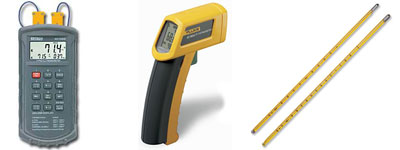
Thermometers
Taking temperature readings during an investigation is a very important part of a paranormal investigative process. Temperature readings allow you to help eliminate possible causes of photographic anomalies, such as whether or not something you caught on film could have been breath or steam. It also allows you to track and locate “cold spots”. Cold spots are believed to be produced when an entity is drawing all available energy, in the form of heat, from surrounding areas in order to manifest itself. Having the proper temperature-sensing device is crucial if you want to locate them.
Thermocouple

The one tool you’ll want to have for tracking changes in temperature is a thermocouple temperature-sensing device. A thermocouple is a type of temperature sensor that detects changes in voltage between two dissimilar metals joined at one end brought about by changes in temperature. The voltage changes are then converted to temperature degree readings.
Thermocouples can detect changes in air temperature very quickly and come in a variety of calibrations or types based on their use and temperature sensing range. Most common calibration types include J, K, T, & E.
Infrared Thermometers
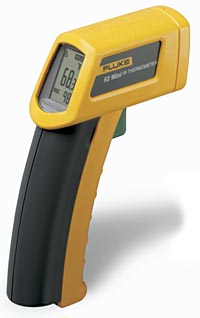
Let me start off by saying we don’t think infrared thermometers are very useful in investigations because they only measure the surface temperature of objects they are pointed at. You will want to stick with a thermocouple device to measure ambient (air) temperature if you are looking for cold spots. Infrared thermometers do come in handy when trying to check the temperatures of areas you can’t access with ambient thermometers.
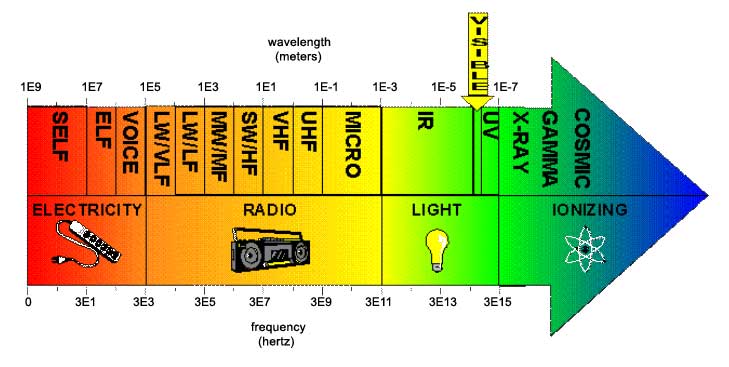
Everything around us emits some sort of infrared light, which is located between the visible light spectrum and radio waves. An infrared thermometer works by focusing infrared light emitted from objects and surfaces on to an electrical detector. The electrical detector converts the light into an electrical signal, which is then converted into a temperature reading.
Tips
If looking for an infrared thermometer, try and get one with a laser light pointer and be sure it has a high distance-to-spot ratio (D:S ratio), which will allow you to take more accurate readings from greater distances. The D:S ratio is the distance to the object compared with the diameter of the temperature measurement area. Example: 10:1 means a measurement of an object 10 inches away will average the temperature over a 1-inch area.
Also, if on an investigation, make sure you allow time for the thermometer to adjust to any major changes in air temperature or your readings can be thrown off. Some IR thermometers allow you to change the emissivity in the unit. All objects emit, reflect and transmit energy. IR thermometers only pick up the emitted energy and the other types of energy can interfere with your readings. If you have the function to change the emissivity, you may want to do so for better results.
Liquid Thermometers

These types of thermometers are common household type thermometers. They use mercury, ammonia or other liquid filled tubes to take temperature readings. The response time is very slow and they are only good for taking general air temperatures.

Motion Detectors
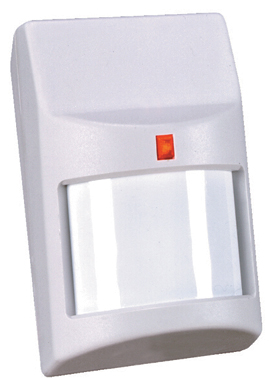
Motion detectors are very useful on investigations for various reasons. You can use them to secure an area where you set up stationary equipment to prevent tampering or interference, or you can use them to try and directly locate spirits if one happens to trigger the device. The best motion detectors to get are passive infrared sensors (IR sensors). Infrared motion detectors work by sensing a change in the infrared light caused when something moves in front of the device. Motion detectors are cheap and useful devices that all paranormal researchers should have.


Ion Counters
These devices are used to detect the amount of negative or positive ions in the air. Many investigators use ion counters, but from our understanding and research it seems the accuracy is very low with them and you can’t differentiate between positive and negative ions most of the time. Using ions to detect ghosts may be something to look into though. Negative ions build up during thunderstorms and around moving water so it may be possible spirits use the negative ions for energy to manifest. A lot of ghost stories center around stormy nights so maybe there is some truth behind the stories.


Geiger Counters
Geiger counters are said to be useful pieces of equipment for detecting ionizing radiation (radiation that changes the charge of an atom or molecule) possibly given off or absorbed by spirit activity. They work by using an inert gas-filled tube (usually Helium, Neon or Argon with Halogens added) that briefly conducts electricity when radiation makes the gas conductive. The röntgen (roentgen) equivalent in man or rem is commonly used to measure radiation.