On this page you will find a listing of various paranormal experiments we have been conducting in order to prove or disprove various aspects of the paranormal. The experiments may change over time as we try different approaches and new equipment. We are always on the lookout to test or debunk existing theories and experiments. Please contact us if you have any ideas or new experiments you would like us to try out. We aim to conduct all experiments under controlled and scientific conditions, adhering to our protocols and the scientific method.

Plasma Lamp Experiment
Can energy from spirit activity disrupt the plasma in a plasma lamp, and can the lamp help detect it?

Faraday Cage Digital Audio Experiment
Shielding digital audio recorders from radio waves to rule out interference as a source of false EVPs.

Frank’s Box / RadioShack Hack Experiment
SPLAT’s homemade spirit box, built by modifying a RadioShack AM/FM radio to scan continuously.

Infrared Light Experiment
Can the infrared light from remote controls be caught on camera with Sony NightShot?
Laser Light / Shadow Entities Experiment
Can laser beams be used to detect and track shadow entities?
Blind Experiments
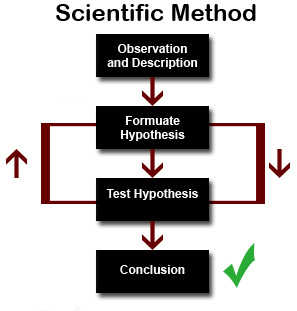
We are going to be conducting “blind” experiments in the near future to see what effect it has on our data gathering. Blind experiments will allow us to test whether front-loading our team members with knowledge is affecting investigation results.
Blind experiment types and their meanings:
Single Blind: This type of blind test is used when information about an experiment is withheld from testing subjects because they have the chance of skewing the results if they were to know the details of the experiment. Subjects do not know anything about the experiment or whether or not they are in the test group or the experimental control group. A good example of this type of test would be the “Pepsi Challenge”.
Double Blind: This type of blind test is used to remove subjective bias from experiments by withholding information about the experiment from both the researchers and the subjects involved, so that neither group knows who is part of the control group. Double blind experiments are best used when there is a chance of conscious or unconscious bias on the part of the experimenter, also known as experimenter effect.
Triple Blind: Triple blind experiments are basically those in which the statistician interpreting the results also does not know anything about the experiment being performed.
Some Key Experimentation Terms
Experimenter effect: The experimenter effect is a term describing any of a number of subtle cues or signals from an experimenter that affect the performance or response of subjects in the experiment. This can be different vocal patterns, subtle gestures, slight changes in posture or any other signal that might influence the subjects.
Ganzfeld Experiment: A form of mild sensory deprivation that is believed to enhance the mind’s ability to perceive psychic information by eliminating distractions.
Objective Experience: A philosophical judgment in which claims of something are assumed to be free of personal considerations, emotional effects, etc. Example: The book on the table weighs 4 lbs. These claims can be tested and backed up by scientific measurement.
Subjective Experience: A philosophical judgment in which claims are heavily (if not entirely) influenced by personal considerations. Example: The book on the table looks heavy.
Decline Effect: An observation made when an individual being tested for psychic abilities begins to lose abilities after repeated testing. The subject eventually reaches a point of common chance for what they are being tested for. This could be caused by fatigue from repetitive testing or may indicate fraudulent psychic powers.
Sheep-Goat Effect: A parapsychology term which states that those who believe (sheep) in paranormal or PSI abilities score better under scientific testing than those who don’t (goats). It was discovered by parapsychologist Gertrude Schmeidler.
